
UPSC Mapping
Prelims
Governance, MoSPI, Infrastructure Monitoring, PRAGATI
Mains
GS Paper II – E-Governance, Transparency and Infrastructure Delivery
| Launch | September 2025 |
|---|---|
| Ministry | MoSPI |
| Project Threshold | ₹150 crore or more |
| Projects Covered | 1,847 |
What is PAIMANA platform?
PAIMANA stands for Project Assessment, Infrastructure Monitoring and Analytics for Nation-Building. It is a web-based platform under the Ministry of Statistics and Programme Implementation for monitoring ongoing Central Sector infrastructure projects costing ₹150 crore or more.
The PAIMANA platform represents a transition from conventional project reporting towards automated, evidence-based monitoring. It replaced the Online Computerized Monitoring System (OCMS-2006) with a framework designed to integrate project information, track performance and surface implementation bottlenecks.
Why is PAIMANA platform in News?
Since its launch in September 2025, 1,847 Central Sector projects worth ₹40.54 lakh crore across 17 Ministries have been placed under automated oversight. This highlights the government’s efforts to strengthen infrastructure project monitoring and public-sector implementation.
Under the One Data One Entry principle, over 60% of project updates occur automatically via secure APIs, reducing repetitive reporting and improving data reliability.
Key Features
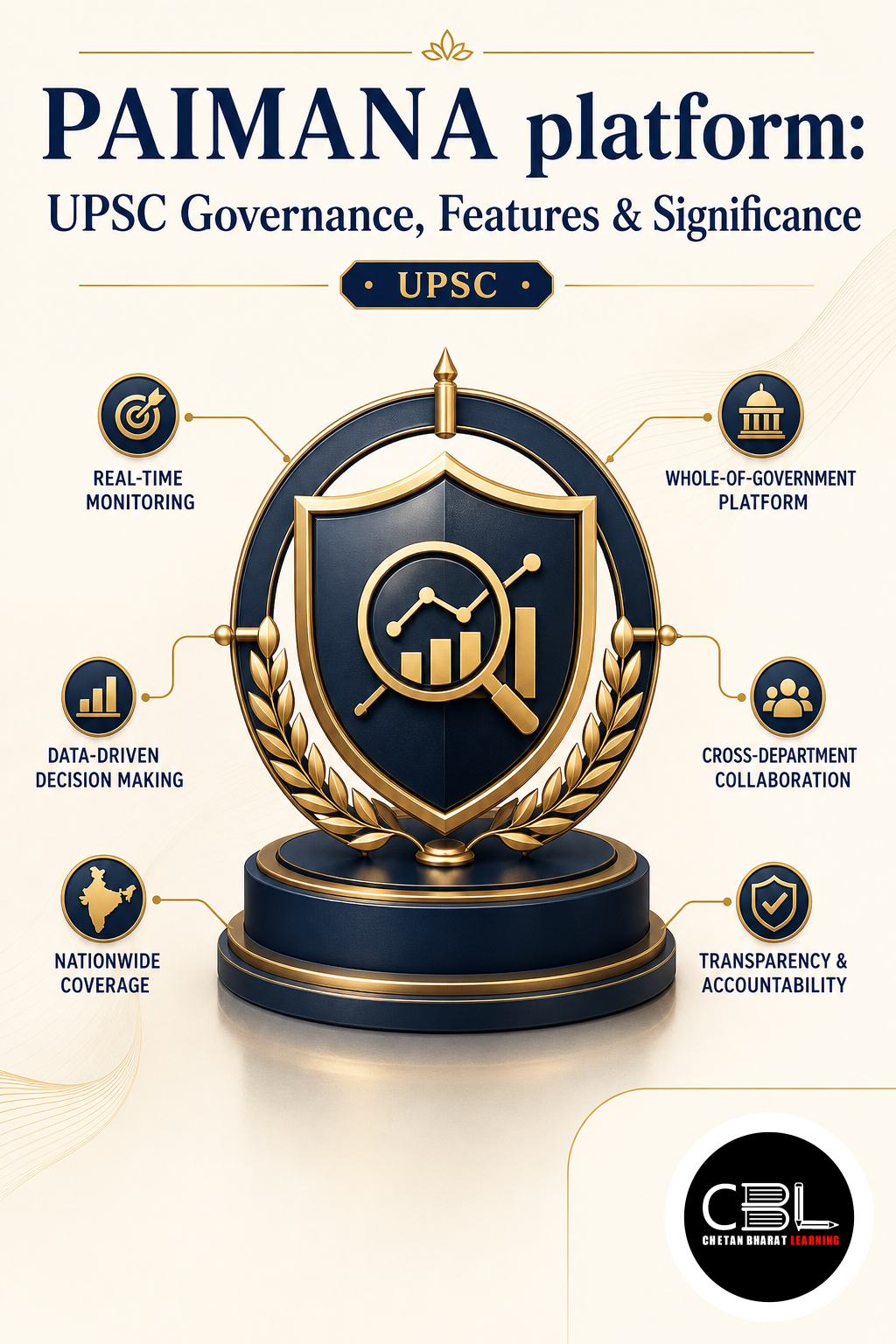
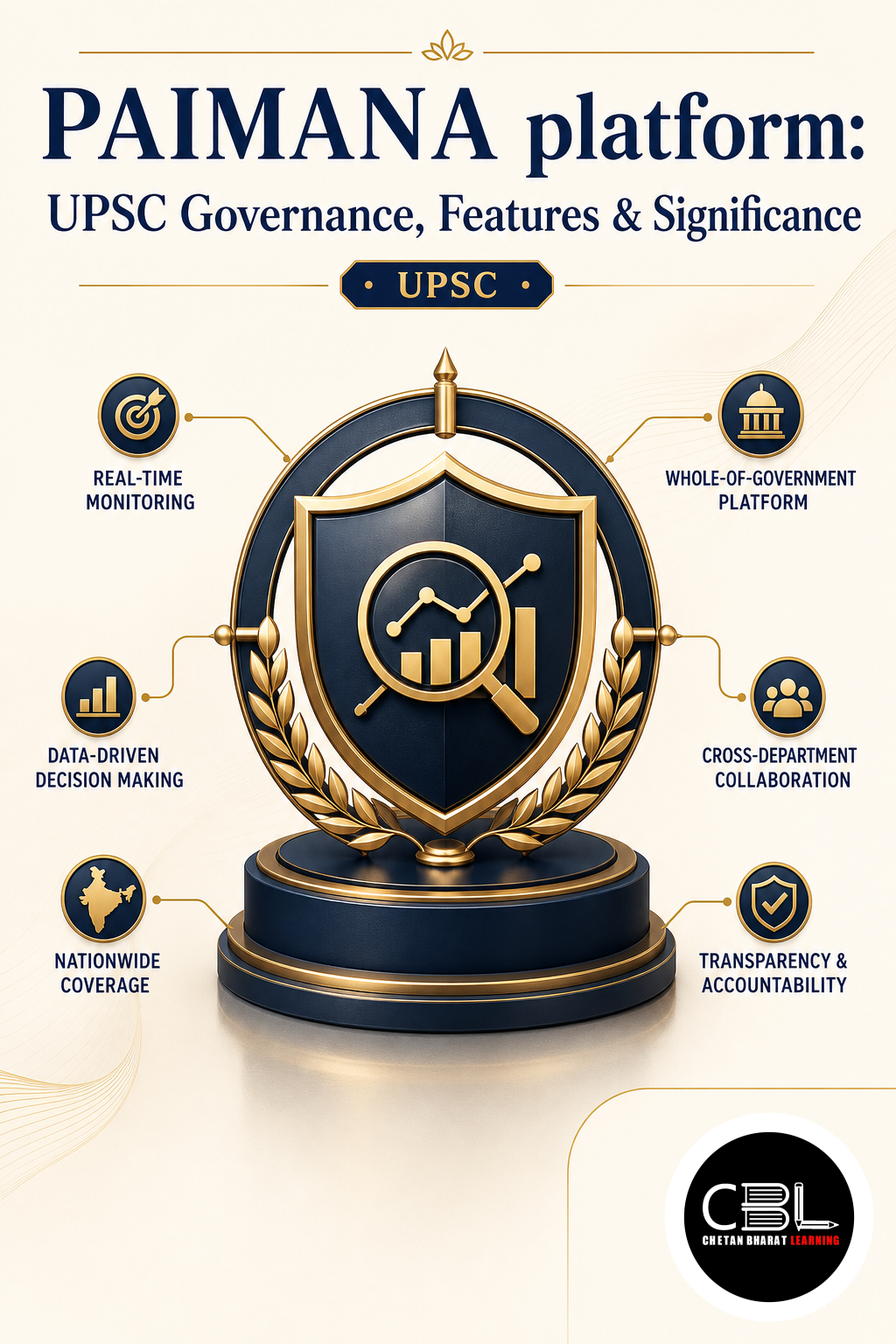
- Web-based monitoring: Tracks Central Sector projects costing ₹150 crore or more.
- One Data One Entry: Secure API integration automates data updates.
- Performance dashboard: Monitors 165 indicators on growth rates, targets and capacity utilisation.
- Multi-sector coverage: Includes Power, Civil Aviation, Telecommunications, Railways, Roads, and Ports, Shipping & Waterways.
- Analytical alignment: Developed with NIPFP and aligned with DEA’s Harmonized Master List of Infrastructure, 2022.
From OCMS to PAIMANA
The shift illustrates a move from periodic, department-submitted reports to real-time analytics via automated data flows and a unified monitoring architecture, reducing delays and data discrepancies.
How PAIMANA Improves Infrastructure Governance
By consolidating project-level information, PAIMANA enables variance tracking against baseline costs, early identification of deviations and timely escalations, thereby aiding cost-overrun containment and enhancing public expenditure management.
PAIMANA-CRIP and Project Escalation
The PAIMANA-CRIP module, launched in July 2026, feeds project data into PRAGATI and the Project Monitoring Group, linking digital monitoring with executive intervention for mega projects (₹500 crore or more).
Significance of PAIMANA platform
PAIMANA fosters continuous information flow, supports costOverrun containment, reduces data reconciliation issues, enhances accountability through visible dashboards, and promotes evidence-based governance.
Link with PRAGATI and Cooperative Governance
Integration with PRAGATI accelerates escalation of bottlenecks to higher authorities, crucial in India’s federal system where central projects rely on state-level clearances.
Challenges
- Data quality: Depends on accuracy and timeliness of source databases.
- Inter-agency coordination: Dashboards alone cannot resolve institutional conflicts.
- Ground-level verification: Field assessments remain essential.
- Clearance complexity: Legal and institutional hurdles may persist.
- Implementation capacity: Officials need skills to act on dashboard insights.
PAIMANA and Good Governance
By enhancing transparency, accountability, responsiveness and efficiency, PAIMANA exemplifies how e-governance can reform administrative processes rather than merely digitise paperwork.
Way Forward
Future focus should include standardised data definitions, strong validation, systematic field verification, outcome-based monitoring and capacity building at central and state levels. Lessons from PAIMANA can guide broader digital governance reforms via interoperable databases and common standards.
Prelims Practice Corner
-
Q1. PAIMANA is associated primarily with monitoring which of the following?
- (a) Agricultural exports
- (b) Central Sector infrastructure projects
- (c) State-level school education
- (d) Municipal taxation
Answer: (b) Central Sector infrastructure projects.
-
Q2. PAIMANA operates under which Union Ministry?
- (a) Ministry of Finance
- (b) Ministry of Statistics and Programme Implementation
- (c) Ministry of Commerce and Industry
- (d) Ministry of Heavy Industries
Answer: (b) Ministry of Statistics and Programme Implementation.
-
Q3. The ‘One Data One Entry’ principle primarily seeks to:
- (a) Eliminate all government databases
- (b) Automate and streamline project data updates
- (c) Replace PRAGATI
- (d) Monitor only private projects
Answer: (b) Automate and streamline project data updates.
-
Q4. Which of the following is included among the sectors covered by PAIMANA?
- (a) Railways
- (b) Agriculture only
- (c) Tourism only
- (d) School education only
Answer: (a) Railways.
-
Q5. PAIMANA-CRIP is linked with which of the following mechanisms?
- (a) PRAGATI and Project Monitoring Group
- (b) GST Council and Finance Commission
- (c) Election Commission and NITI Aayog
- (d) UPSC and Staff Selection Commission
Answer: (a) PRAGATI and Project Monitoring Group.
Mains Practice Questions
-
Q1. How can digital project monitoring platforms improve infrastructure governance in India? Discuss with reference to PAIMANA. (10 marks)
Answer Structure:
- Intro: Define PAIMANA as a digital platform for automated monitoring of major Central Sector infrastructure projects.
- Body: Discuss automated data integration, One Data One Entry, performance indicators, cost-variance tracking, bottleneck identification, PRAGATI linkage, transparency and accountability, along with data-quality and coordination challenges.
- Conclusion: Emphasise that technology delivers good governance when supported by institutional capacity and timely administrative action.
-
Q2. Infrastructure delays in India are often institutional rather than technological. Examine how integrated monitoring can address such bottlenecks. (15 marks)
Answer Structure:
- Intro: Explain that infrastructure projects involve multiple agencies and face delays from clearances, land and inter-governmental coordination.
- Body: Cover automated data flows, early-warning indicators, Right-of-Way tracking, environmental clearance bottlenecks, escalation through PRAGATI, Central-State coordination, field verification, data quality and outcome-based monitoring.
- Conclusion: Recommend interoperable digital systems, accountable institutions and cooperative federalism for faster project delivery.
FAQs on PAIMANA platform
- What is PAIMANA?
- PAIMANA stands for Project Assessment, Infrastructure Monitoring and Analytics for Nation-Building. It is a web-based MoSPI platform for monitoring Central Sector infrastructure projects costing ₹150 crore or more.
- What does the One Data One Entry principle mean?
- It refers to a data architecture in which project information flows through secure APIs from ministerial databases rather than being repeatedly entered manually. Over 60% of updates occur automatically.
- How is PAIMANA linked with PRAGATI?
- The PAIMANA-CRIP module feeds relevant project information into PRAGATI and the Project Monitoring Group, creating a pathway for escalating stalled projects.
Related Current Affairs
Preparing for UPSC, PCS or HCS?
Talk to a mentor at Chetan Bharat Learning, Chandigarh. Free guidance on choosing the right exam and building a study plan.
Chat on WhatsAppCall 97793 53345UPSC / IAS / PCS coaching in Chandigarh · Trusted by aspirants across Punjab & Haryana
Leave a Reply
You must be logged in to post a comment.