
UPSC Mapping
| Aspect | Details |
|---|---|
| Prelims | Supreme Court, Gender Sensitivity, SOGIESC and Survivor-Centric Justice |
| Mains | GS Paper I – Indian Society, Gender Issues and Social Justice |
| Institution | Supreme Court of India |
| Updated Framework | Judgments and Gender: Sensitivity and Compassion in Writing Judgments |
| Earlier Framework | 2023 Handbook on Combating Gender Stereotypes |
Article
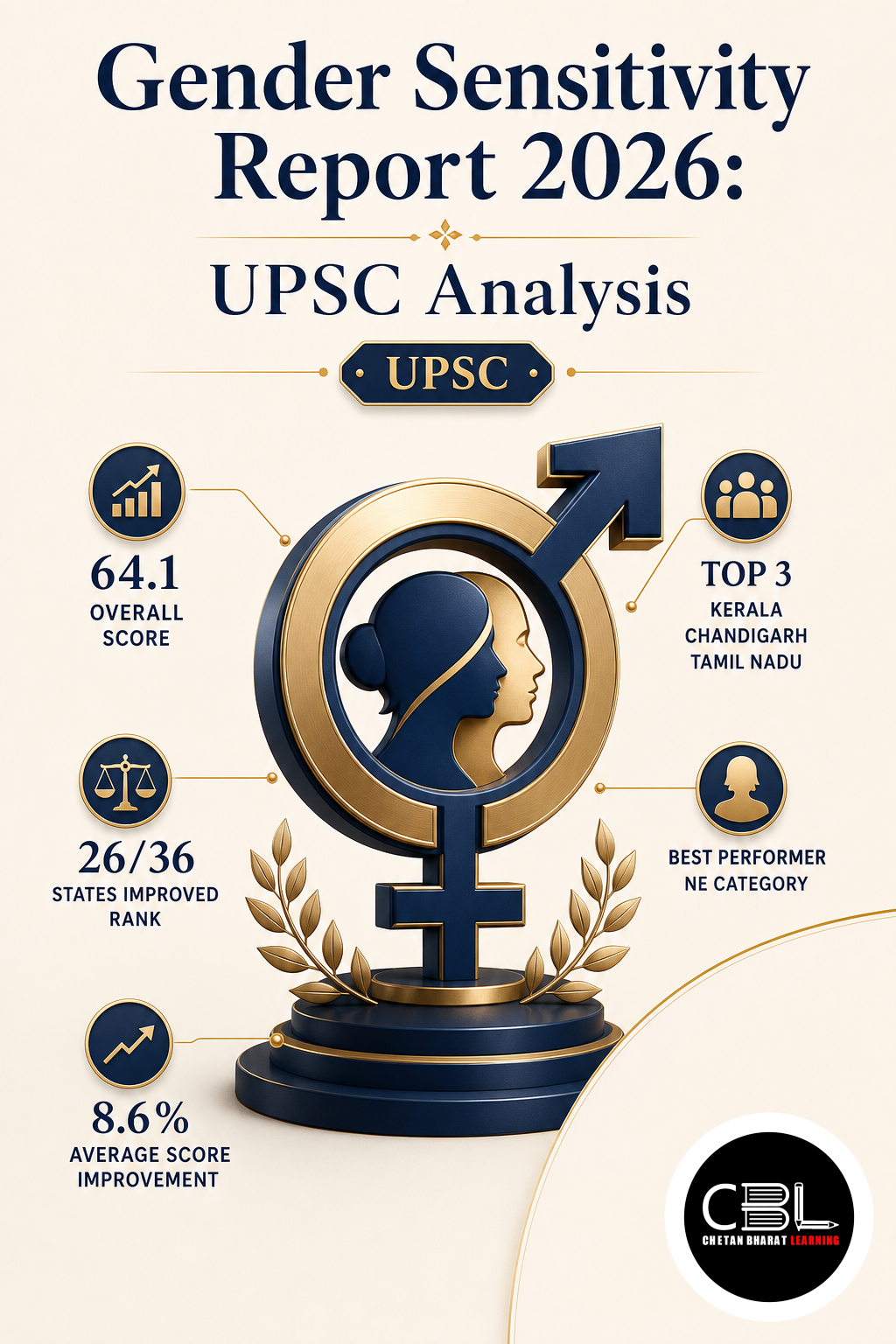
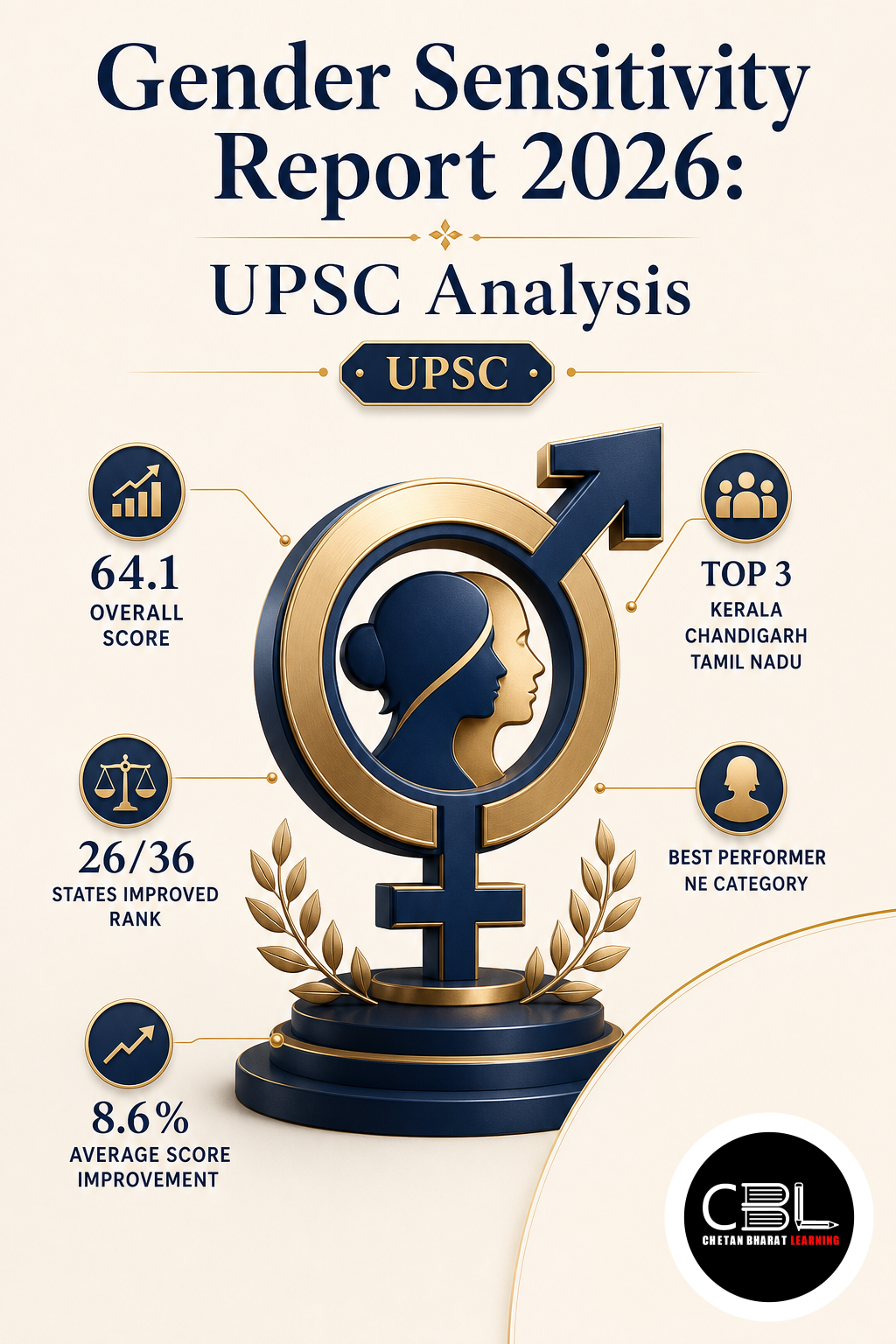
Gender Sensitivity Report is in focus after the Supreme Court released its updated framework, titled Judgments and Gender: Sensitivity and Compassion in Writing Judgments. It replaces the 2023 Handbook on Combating Gender Stereotypes and seeks to promote trauma-informed, survivor-centric adjudication across Indian courts. For related UPSC preparation, explore the daily current affairs archive.
What is Gender Sensitivity Report?
The Gender Sensitivity Report is an updated judicial framework intended to make courtroom processes and judgments more sensitive to the experiences of survivors and gender-diverse individuals. It focuses on both the language used by judges and preventing further harm during adjudication. Replacing the 2023 Handbook on Combating Gender Stereotypes, the new approach introduces broader protocols for survivor-centric and trauma-informed adjudication, recognising the risk of secondary victimisation during judicial proceedings.
Why is Gender Sensitivity Report in News?
The Supreme Court released the updated report, moving from a primarily language-focused approach to a broader victim-centric justice framework. It encourages judicial intervention against humiliating cross-examination, supports in-camera proceedings, video conferencing, pseudonyms for identity protection, and cautions against drawing adverse conclusions from delayed reporting, lack of injuries or inconsistencies in testimony. The report also advocates replacing patriarchal and victim-blaming terminology with legally precise and dignified expressions.
Key Features
- Victim-centric justice: Reduces secondary victimisation and places survivor dignity at the centre of adjudication.
- Controlled cross-examination: Judges intervene against humiliating or irrelevant questions on personal or sexual history.
- Identity protection: In-camera proceedings, video conferencing and pseudonyms or initials safeguard privacy.
- Trauma-informed approach: Delayed reporting, lack of physical injuries or inconsistencies should not alone become grounds for adverse conclusions.
- Inclusive language: Discourages patriarchal and victim-blaming terminology, promoting legal precision and dignity.
Inclusive Language and Legal Precision
The framework advises against terms like “helpless woman” or “poor helpless minor girl,” urging the use of survivor, complainant or minor victim. It cautions against moralistic concepts such as chastity and honour, and physiological explanations like “hormonal changes,” promoting legally precise terms such as sexual assault to ensure judgments rest on relevant facts rather than stereotypes.
SOGIESC and Inclusivity
Introducing the SOGIESC framework—Sexual Orientation, Gender Identity and Expression, Sex Characteristics—the report broadens focus to LGBTQIA+ and gender-diverse individuals. It mandates respectful treatment, dignity in procedures, and judicial reasoning free from discriminatory assumptions, linking constitutional equality to institutional practice.
Challenges
Implementing gender-sensitive adjudication demands consistent judicial application, training in trauma-informed approaches, balancing survivor protection with fair-trial rights, infrastructure for in-camera and remote testimony, and shifting deep-rooted social stereotypes. Institutional culture, clear protocols and continuous training are essential for uniform practices across courts.
Way Forward
Effective implementation hinges on judicial education, consistent protocols for identity protection and remote hearings, ongoing language review, embedding SOGIESC in training, and leveraging technology for secure participation. Survivor-centric adjudication must align with natural justice, evidentiary standards and impartiality, strengthening public confidence through precise, constitutionally grounded and dignified reasoning.
Prelims Practice Corner
- Q1. The updated Supreme Court framework on gender sensitivity is titled:
(a) Gender Justice and Courts
(b) Judgments and Gender: Sensitivity and Compassion in Writing Judgments
(c) Gender Equality in India
(d) Courts and Social Justice
Answer: (b) - Q2. The 2026 framework replaces which earlier document?
(a) 2013 Judicial Handbook
(b) 2018 Gender Justice Manual
(c) 2023 Handbook on Combating Gender Stereotypes
(d) 2024 Women and Law Report
Answer: (c) - Q3. SOGIESC in the report relates to:
(a) Social Organisations and Gender Equality in Courts
(b) Sexual Orientation, Gender Identity and Expression, and Sex Characteristics
(c) State Oversight of Gender Institutions and Social Courts
(d) Sexual Offence Guidelines for Indian Evidence and Criminal Courts
Answer: (b) - Q4. Which of the following does the report caution judges against treating as automatically adverse to a survivor?
(a) Delayed reporting
(b) Absence of physical injuries
(c) Testimony inconsistencies
(d) All of the above
Answer: (d) - Q5. Which of the following is encouraged for protecting survivor identity?
(a) Public disclosure of identity
(b) In-camera proceedings and pseudonyms or initials
(c) Mandatory media interviews
(d) Open publication of personal history
Answer: (b)
Mains Practice Questions
Q1.
Discuss how gender-sensitive judicial practices can strengthen access to justice and constitutional dignity. (10 Marks)
Answer Structure:
Intro: Introduce gender-sensitive adjudication as combining legal precision with dignity and survivor protection.
Body: Cover survivor-centric justice, controlled cross-examination, identity protection, trauma-informed reasoning, inclusive language and SOGIESC-based inclusivity.
Conclusion: Emphasise dignity-sensitive procedures’ role in public trust and fair-trial principles.
Q2.
Examine the role of judicial language in challenging gender stereotypes and promoting substantive equality. (15 Marks)
Answer Structure:
Intro: Explain judicial language’s impact on reasoning and institutional perceptions.
Body: Discuss victim-blaming terminology, references to chastity, moral judgments, physiological explanations, the shift to precise legal terms, SOGIESC inclusivity and courts’ role in social change.
Conclusion: Advocate precise, neutral, dignity-based judicial writing aligned with constitutional equality.
FAQs on Gender Sensitivity Report
What is the main objective of the updated gender sensitivity framework?
The framework seeks to promote trauma-informed and survivor-centric adjudication, reducing secondary victimisation while encouraging legally precise and inclusive judicial language.
What does the SOGIESC framework mean?
SOGIESC stands for Sexual Orientation, Gender Identity and Expression, and Sex Characteristics. The framework uses this lens to support dignified treatment of LGBTQIA+ and gender-diverse individuals.
How does the framework address secondary victimisation?
It encourages judges to stop humiliating or irrelevant questions during cross-examination and supports identity-protection measures such as in-camera proceedings, video conferencing and pseudonyms or initials.
Related Current Affairs
Preparing for UPSC, PCS or HCS?
Talk to a mentor at Chetan Bharat Learning, Chandigarh. Free guidance on choosing the right exam and building a study plan.
Chat on WhatsAppCall 97793 53345UPSC / IAS / PCS coaching in Chandigarh · Trusted by aspirants across Punjab & Haryana
Leave a Reply
You must be logged in to post a comment.