

UPSC Mapping
Prelims
- Tribal Folk Dances
- Andhra Pradesh
- Art and Culture
Mains
- GS Paper I – Indian Heritage and Culture
Quick Facts
| State | Andhra Pradesh |
|---|---|
| Region | Araku Valley & Alluri Sitharama Raju District |
| Origin | Koraput Region |
| Recognition | Largest Dhimsa Dance – Guinness World Records |
What is Dhimsa Dance?
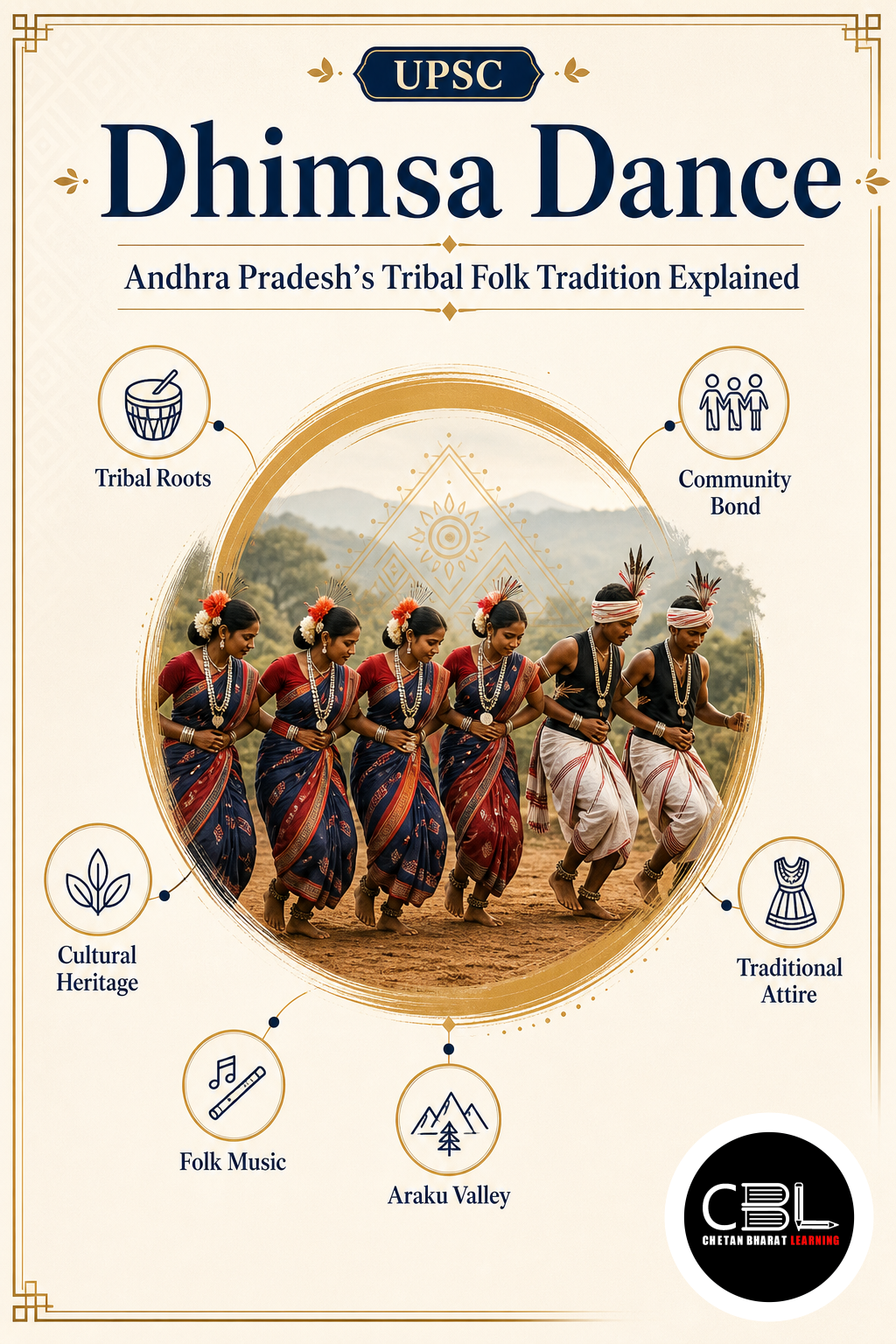
Dhimsa Dance is a traditional tribal folk dance performed by indigenous communities such as the Bagata, Gadaba, Kondadora, Poraja and Valmiki tribes of the Araku Valley and Alluri Sitharama Raju district in Andhra Pradesh. According to sources, its origin is traced to the Koraput region.
The dance reflects the social and cultural traditions of tribal communities and is performed collectively with rhythmic movements and indigenous musical instruments. It remains an important expression of tribal identity and community life.
Why is Dhimsa Dance in News?
Dhimsa Dance entered the news after a performance by approximately 13,000 tribal women and girl students at the Alluri Sitarama Raju International Airport was recognised by Guinness World Records as the largest Dhimsa dance performance.
The event highlighted the cultural richness of Andhra Pradesh’s tribal communities and promoted awareness of India’s indigenous folk traditions. More information on cultural initiatives is available through the Ministry of Culture.
Key Features
- Community participation: Performed by 15–20 women dressed in colourful traditional attire moving in synchronised circles.
- Traditional instruments: Indigenous instruments such as dappu, tudumu, mori, kidgi, gilka and jodukommulu provide rhythmic accompaniment.
- Cultural themes: Performances portray tribal mythology, folklore, livelihood, kinship and various aspects of social life.
- Festive occasions: Performed during Chaitrapurab (Eetela Panduga), marriages, festivals and religious ceremonies.
- Living heritage: Preserves and transmits the traditions of Andhra Pradesh’s tribal communities across generations.
Challenges
- Cultural preservation: Documentation and promotion are essential to safeguard indigenous traditions.
- Youth participation: Encouraging younger generations to learn traditional dance forms remains important.
- Recognition: Wider national and international awareness can support the preservation of tribal heritage.
- Institutional support: Cultural programmes and festivals can strengthen the visibility of tribal folk traditions.
- Community empowerment: Sustained support for tribal artists contributes to cultural continuity.
Way Forward
The Guinness World Records recognition demonstrates the growing appreciation of India’s tribal cultural heritage. Promoting traditional folk arts through festivals, tourism, educational initiatives and cultural documentation can strengthen awareness among future generations.
Preserving indigenous dance forms like Dhimsa also supports cultural diversity and highlights the contribution of tribal communities to India’s rich heritage. Official information on cultural preservation programmes is available through the Indian Culture Portal.
Prelims Practice Corner
Q1. Dhimsa Dance is primarily associated with which state?
(a) Odisha (b) Andhra Pradesh (c) Telangana (d) Chhattisgarh
Answer: (b)
Q2. Dhimsa Dance is mainly performed by:
(a) Classical dancers (b) Tribal women (c) Temple priests (d) Martial artists
Answer: (b)
Q3. The origin of Dhimsa Dance is traced to:
(a) Bastar (b) Koraput Region (c) Nilgiris (d) Vindhya Hills
Answer: (b)
Q4. Which of the following is an indigenous instrument used in Dhimsa Dance?
(a) Santoor (b) Dappu (c) Sarangi (d) Veena
Answer: (b)
Q5. Dhimsa Dance is commonly performed during:
(a) Republic Day only (b) Chaitrapurab, marriages and festivals (c) Election campaigns (d) Harvest auctions
Answer: (b)
Mains Practice Questions
Q1. Discuss the cultural significance of tribal folk dances with special reference to Dhimsa Dance. (10 Marks)
- Intro: Introduce tribal folk dances as expressions of indigenous culture.
- Body: Origin, performance style, themes, festivals and cultural importance of Dhimsa Dance.
- Conclusion: Highlight the need to preserve tribal cultural heritage.
Q2. Explain the role of traditional tribal art forms in preserving India’s cultural diversity. (15 Marks)
- Intro: Define tribal cultural heritage.
- Body: Importance of folk dances, cultural identity, preservation challenges and government initiatives.
- Conclusion: Emphasise sustainable preservation of indigenous traditions.
FAQs on Dhimsa Dance
What is Dhimsa Dance?
According to sources, Dhimsa Dance is a traditional tribal folk dance performed by indigenous communities of the Araku Valley and Alluri Sitharama Raju district in Andhra Pradesh.
During which occasions is Dhimsa Dance performed?
The dance is performed during Chaitrapurab (Eetela Panduga), marriages, festivals and religious ceremonies while depicting tribal mythology, folklore and social life.
Why is Dhimsa Dance important for UPSC?
It is an important tribal folk dance of Andhra Pradesh frequently asked in UPSC Prelims under Art and Culture, especially in questions related to tribal traditions and regional folk dances.
Related Current Affairs
Preparing for UPSC, PCS or HCS?
Talk to a mentor at Chetan Bharat Learning, Chandigarh. Free guidance on choosing the right exam and building a study plan.
Chat on WhatsAppCall 97793 53345UPSC / IAS / PCS coaching in Chandigarh · Trusted by aspirants across Punjab & Haryana
Leave a Reply
You must be logged in to post a comment.