
UPSC Syllabus Mapping
| GS Paper | GS-III |
|---|---|
| Subject | Indian Economy, Banking, Financial Institutions |
What are Polymer Currency Notes?
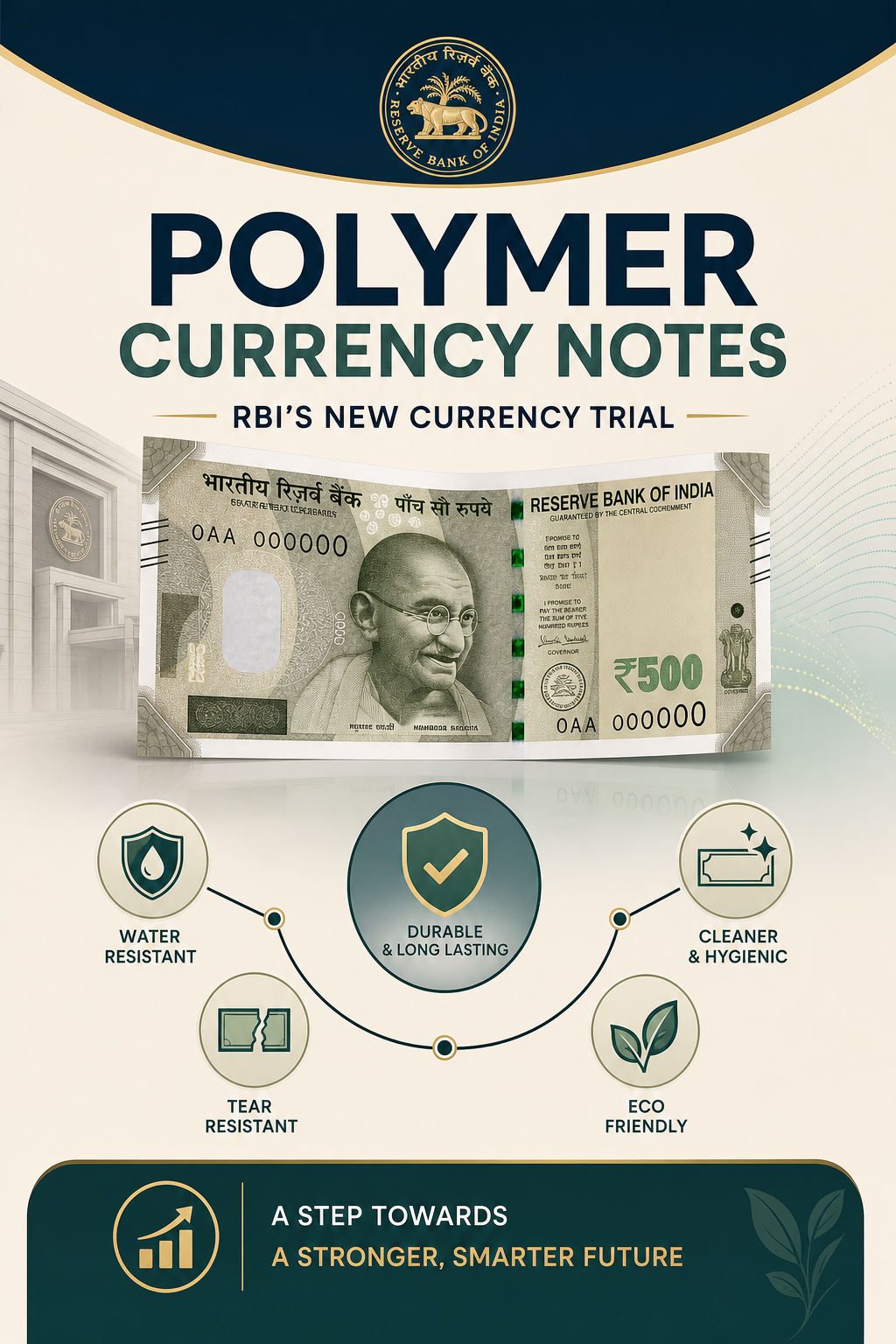
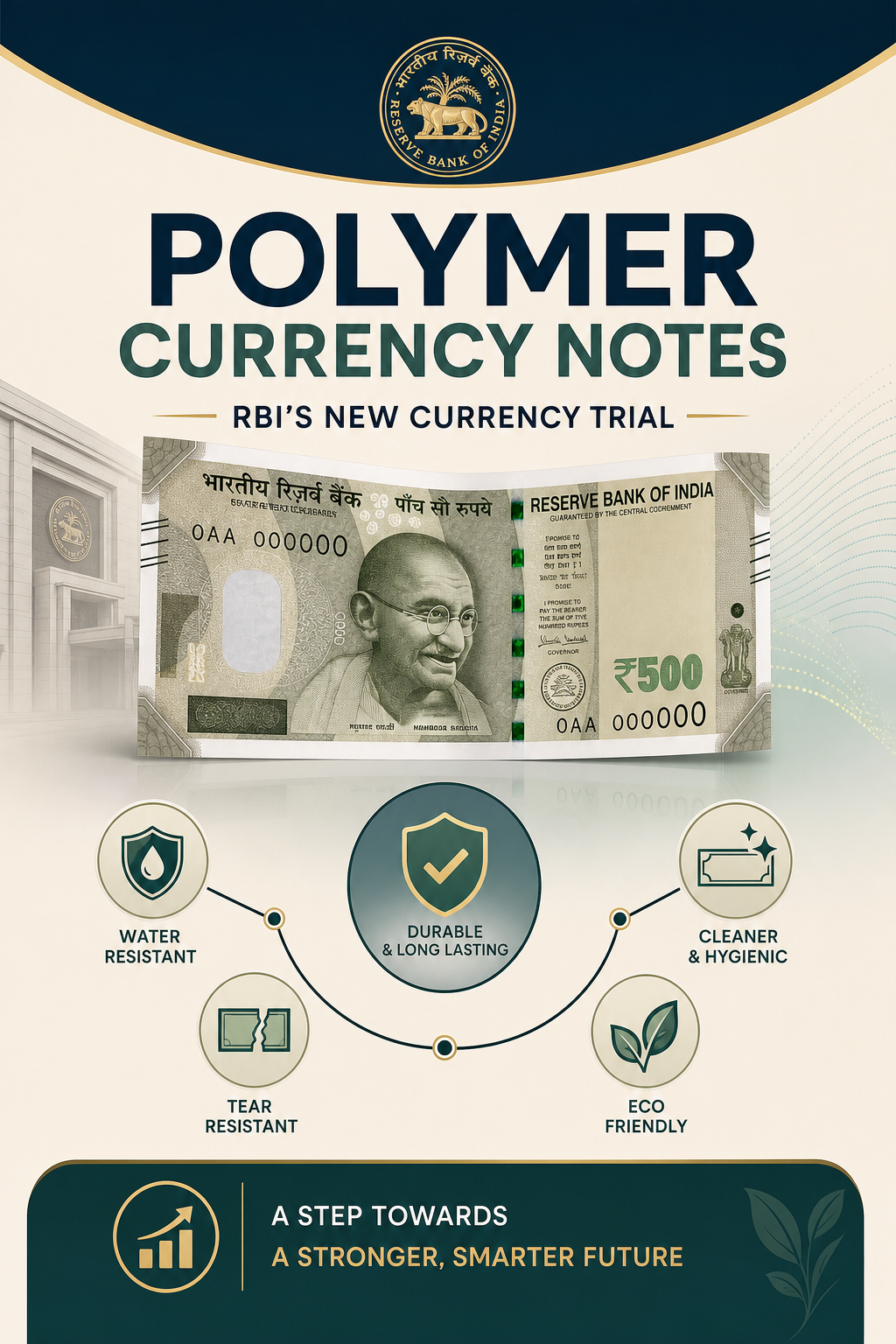
Polymer Currency Notes are banknotes printed on specially engineered biaxially oriented polypropylene (BOPP) polymer substrates instead of traditional cotton paper. These notes incorporate advanced security features that make them significantly more resistant to wear and counterfeiting.
First introduced by Australia in 1988, polymer banknotes are now used in over 50 countries. They typically last two to six times longer than paper notes, remain cleaner in circulation and can be recycled after their useful life, thereby reducing long-term replacement costs.
Why are Polymer Currency Notes in News?
The Bharatiya Reserve Bank Note Mudran Private Limited (BRBNMPL), a wholly-owned subsidiary of the RBI, has floated a global Expression of Interest (EOI) for procuring polymer substrates with advanced security features. The proposed field trial will initially cover two denominations before any wider rollout.
The RBI is evaluating whether polymer notes can improve durability, reduce printing costs over time and strengthen anti-counterfeit measures. The central bank has indicated that wider procurement will be considered only after successful field trials. Official updates can be accessed through the Reserve Bank of India.
Key Features
- Manufactured using biaxially oriented polypropylene polymer substrate.
- Two to six times more durable than conventional paper banknotes.
- Enhanced resistance to moisture, dirt and tearing.
- Supports advanced anti-counterfeit security features such as transparent windows and complex printing technologies.
- Lower lifecycle cost because notes require less frequent replacement.
- Environmentally beneficial due to longer circulation life and recyclability.
- Expected to reduce the circulation of fake currency.
Challenges Related to Polymer Currency Notes
Introducing polymer notes requires significant investment in printing infrastructure, procurement systems and quality testing. Existing printing presses may require technological upgrades to accommodate polymer substrates.
Supply chain security remains another concern. The RBI’s tender prescribes strict sourcing conditions and security protocols for bidders to safeguard sensitive currency production.
Way Forward
Successful field trials will help the RBI assess public acceptance, operational efficiency and cost implications before expanding polymer notes across multiple denominations. Continuous innovation in security printing will be crucial for protecting the integrity of India’s currency.
Future adoption should balance durability, environmental sustainability and affordability while strengthening confidence in India’s monetary system.
Prelims Practice Corner
| Question | Answer |
|---|---|
| Polymer banknotes are primarily made from which material? | Biaxially Oriented Polypropylene (BOPP). |
| Which institution issues currency notes in India? | Reserve Bank of India (except Re.1 note). |
| Which country first introduced polymer banknotes? | Australia. |
| Which RBI subsidiary prints banknotes? | BRBNMPL. |
| What is the major advantage of polymer notes? | Higher durability and better resistance to counterfeiting. |
Mains Practice Questions
| Question | Outline |
|---|---|
| Discuss the significance of Polymer Currency Notes in improving India’s currency management and financial security. (10 Marks) | Introduction, Benefits, Challenges, Conclusion. |
| Evaluate the role of technological innovation in strengthening the integrity of India’s monetary system. (15 Marks) | Context, Security Features, Economic Benefits, Challenges, Way Forward. |
FAQs on Polymer Currency Notes
- What are Polymer Currency Notes?
- They are banknotes printed on polymer substrates instead of paper, offering higher durability and better security.
- Why is the RBI considering polymer notes?
- To reduce counterfeiting, increase note lifespan and lower long-term printing and replacement costs.
- Which country introduced polymer banknotes first?
- Australia introduced the world’s first polymer banknotes in 1988.
Related Current Affairs
Preparing for UPSC, PCS or HCS?
Talk to a mentor at Chetan Bharat Learning, Chandigarh. Free guidance on choosing the right exam and building a study plan.
Chat on WhatsAppCall 97793 53345UPSC / IAS / PCS coaching in Chandigarh · Trusted by aspirants across Punjab & Haryana
Leave a Reply
You must be logged in to post a comment.