
UPSC Syllabus Mapping
- GS Paper: GS-II (Polity & Governance) and GS-IV (Ethics, Constitutional Values)
- Subject: Constitution, Fundamental Rights, Fundamental Duties, Parliament
- Prelims: National Anthem, National Song, Prevention of Insults to National Honour Act, 1971
- Mains: Balancing national honour with constitutional freedoms
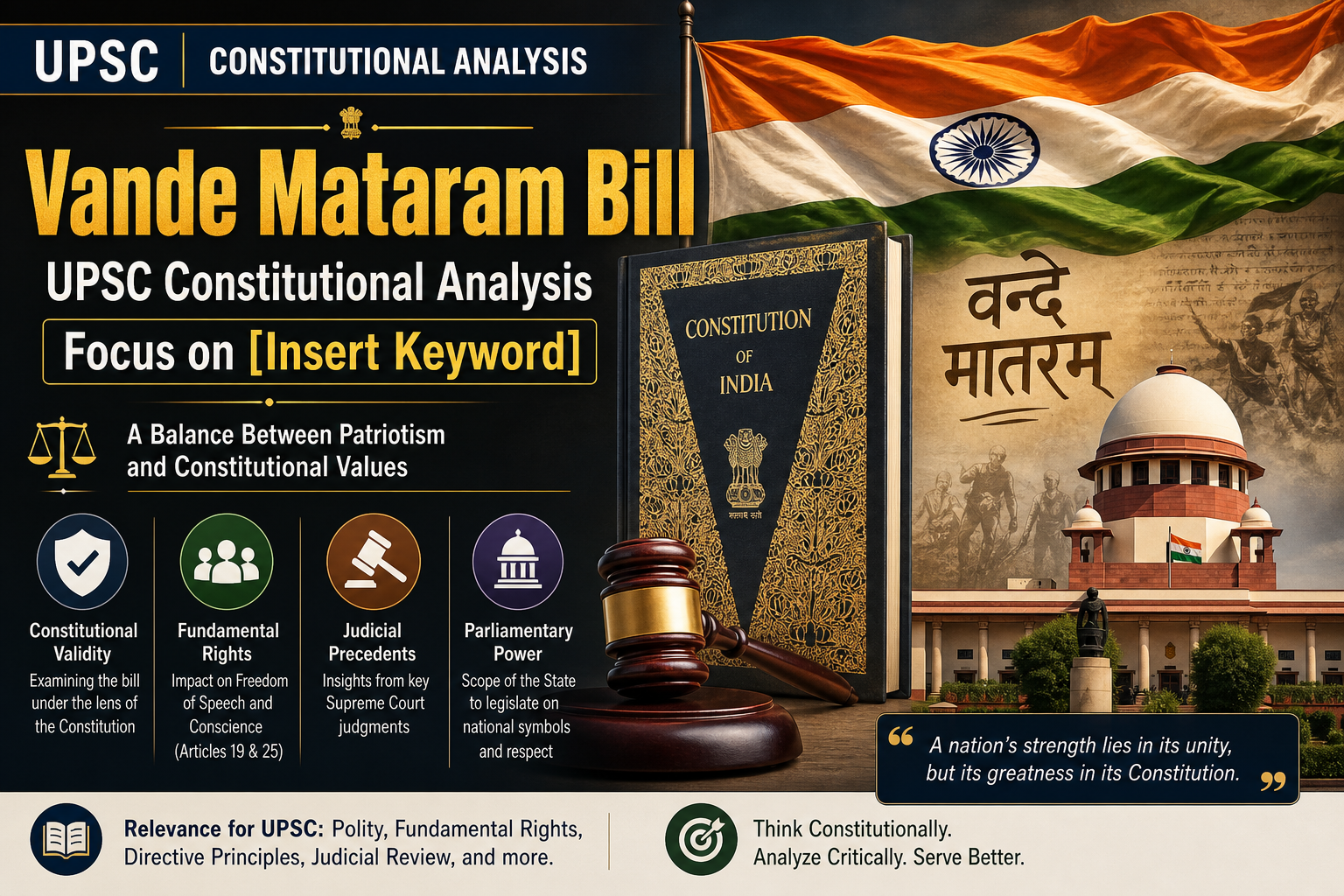
Vande Mataram Bill is in the news after the introduction of the Prevention of Insults to National Honour (Amendment) Bill, 2026, which seeks to extend legal protection similar to that available for the National Anthem (Jana Gana Mana) to the National Song (Vande Mataram). The proposal has revived debate on constitutional freedoms, national symbols and the scope of criminal penalties.
Why in News?
- The government has introduced the Prevention of Insults to National Honour (Amendment) Bill, 2026.
- The Bill proposes extending legal protection against deliberate disruption or prevention of singing Vande Mataram.
- The proposal has generated debate over constitutional rights, religious freedom and national unity.
National Anthem vs National Song
| National Anthem | National Song |
|---|---|
| Jana Gana Mana Written by Rabindranath Tagore. Adopted in 1950. |
Vande Mataram Written by Bankim Chandra Chattopadhyay in the novel Anandamath (1882). The first two stanzas are generally accepted for official occasions. |
Background
“Vande Mataram” played a significant role during India’s freedom movement and inspired nationalist mobilisation. However, some later stanzas contain religious imagery that has led to objections from certain groups. Consequently, official practice generally limits ceremonial use to the first two stanzas.
Existing Legal Position
- The Prevention of Insults to National Honour Act, 1971 currently provides protection for the National Anthem.
- The proposed amendment seeks to extend similar legal safeguards to the National Song.
- The emphasis is on deliberate disruption rather than respectful non-participation.
Constitutional Dimensions
- Article 19(1)(a): Freedom of speech and expression, including the right to remain silent.
- Article 25: Freedom of conscience and religion, subject to reasonable restrictions.
- Article 51A(a): Fundamental Duty to respect the Constitution, National Flag and National Anthem.
Important Judicial Pronouncements
- Bijoe Emmanuel v. State of Kerala (1986): The Supreme Court held that students who respectfully stood but did not sing the National Anthem due to sincerely held religious beliefs could not be compelled to sing, reinforcing freedom of conscience under Articles 19 and 25.
- Shyam Narayan Chouksey v. Union of India (2016 & subsequent orders): The Court emphasised respect for the National Anthem while later modifying earlier interim directions to balance constitutional freedoms.
Arguments in Favour
- Promotes national unity and respect for national symbols.
- Recognises the historic contribution of Vande Mataram during the freedom struggle.
- Provides legal clarity and consistency in protecting national symbols.
Concerns
- Potential impact on freedom of expression and conscience.
- Possibility of criminalising genuine or respectful non-participation.
- Challenges in distinguishing deliberate disruption from peaceful dissent.
- Need to ensure enforcement remains consistent with constitutional values.
Way Forward
- Clearly define ‘deliberate disruption’ in law.
- Protect respectful silence consistent with Supreme Court jurisprudence.
- Promote civic education and constitutional values instead of relying solely on penal measures.
- Maintain a balance between national honour and individual liberties.
Prelims Practice Corner (5 MCQs)
Q1. ‘Vande Mataram’ was written by:
A. Rabindranath Tagore
B. Bankim Chandra Chattopadhyay
C. Sri Aurobindo
D. Subramania Bharati
Ans: B.
Q2. The Prevention of Insults to National Honour Act was enacted in:
A. 1950
B. 1962
C. 1971
D. 1986
Ans: C.
Q3. Which Fundamental Duty specifically mentions respect for the National Flag and National Anthem?
A. Article 48A
B. Article 51A(a)
C. Article 39A
D. Article 21A
Ans: B.
Q4. Bijoe Emmanuel v. State of Kerala primarily dealt with:
A. Preventive detention
B. Religious freedom and the National Anthem
C. Right to Education
D. Reservation policy
Ans: B.
Q5. The first two stanzas of which composition are generally accepted for official use as the National Song?
A. Sare Jahan Se Achha
B. Jana Gana Mana
C. Vande Mataram
D. Ae Mere Watan Ke Logon
Ans: C.
Mains Practice Questions & Answer Structure
Q1. Discuss the constitutional balance between respect for national symbols and protection of Fundamental Rights in India.
Introduction: Constitutional democracy and national identity.
Body: Articles 19, 25, 51A, judicial precedents, proportionality, civic values.
Conclusion: National unity and constitutional liberty are complementary.
Q2. Examine whether criminal penalties are the most effective means of protecting national honour.
Introduction: Purpose of national honour laws.
Body: Merits, constitutional concerns, enforcement challenges, comparative perspective.
Way Forward: Combine legal safeguards with civic education.
FAQs
Is Vande Mataram the National Anthem?
No. Jana Gana Mana is the National Anthem, while Vande Mataram is recognised as the National Song.
Can a person be forced to sing the National Anthem or National Song?
Supreme Court jurisprudence recognises protection for respectful non-participation based on genuine freedom of conscience, while deliberate disruption may attract legal consequences where provided by law.
Why is this topic important for UPSC?
It connects constitutional law, Fundamental Rights, Fundamental Duties, Parliament, judicial precedents and governance, making it highly relevant for both Prelims and GS-II Mains.
Related Current Affairs
Preparing for UPSC, PCS or HCS?
Talk to a mentor at Chetan Bharat Learning, Chandigarh. Free guidance on choosing the right exam and building a study plan.
Chat on WhatsAppCall 97793 53345UPSC / IAS / PCS coaching in Chandigarh · Trusted by aspirants across Punjab & Haryana
Leave a Reply
You must be logged in to post a comment.