
Introduction
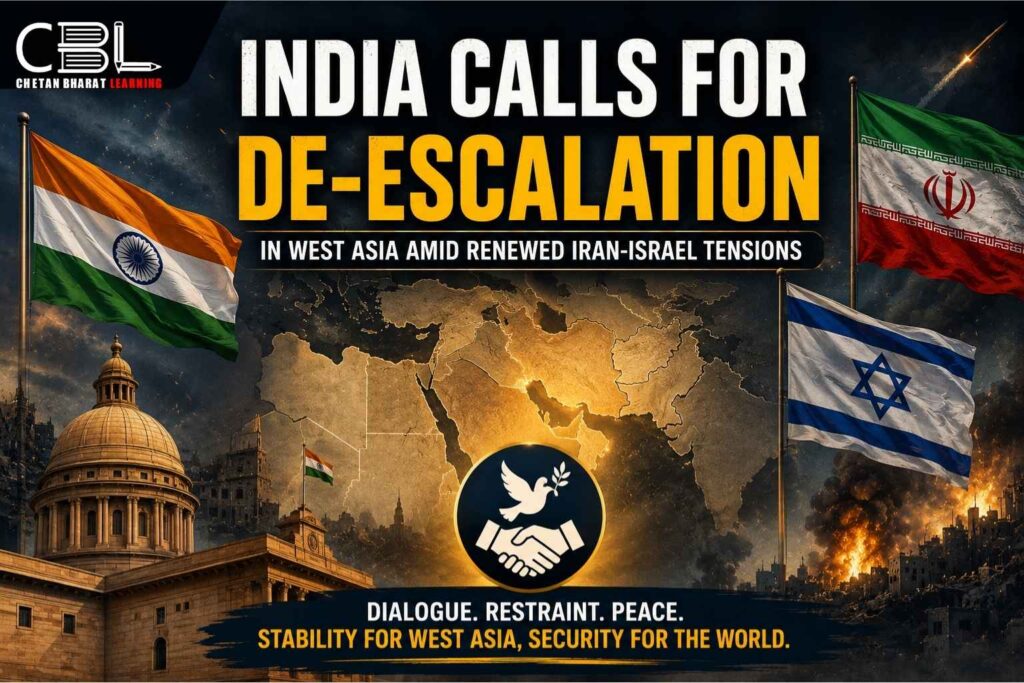
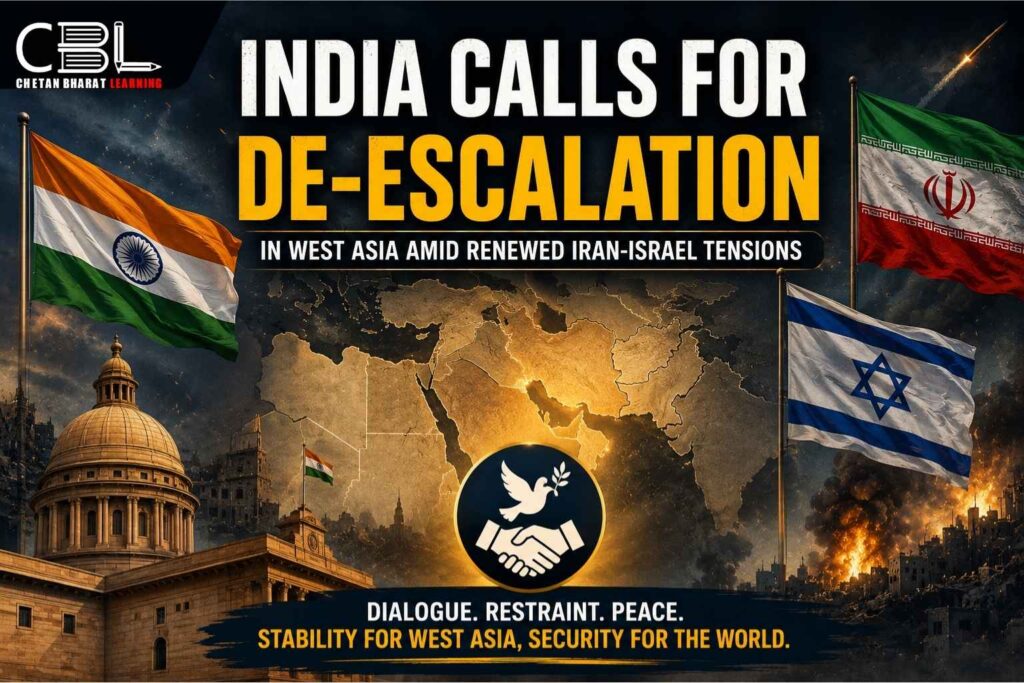
As fresh military strikes disrupted the fragile ceasefire between Iran and Israel, India has once again emphasized the need for immediate de-escalation, dialogue, and diplomatic engagement. The renewed tensions have raised concerns not only about regional stability but also about global energy markets, trade routes, and the safety of millions of people living and working across West Asia.
India’s response reflects its long-standing foreign policy approach of supporting peaceful conflict resolution while safeguarding its strategic interests. Given India’s deep economic, energy, and people-to-people connections with the region, developments in West Asia have direct implications for national security and economic stability.
The latest escalation highlights the complexity of the Iran-Israel conflict and the diplomatic challenges faced by countries like India that maintain important relationships with all major stakeholders in the region.
Renewed Conflict Raises Regional Concerns
The recent exchange of strikes between Iran and Israel has once again brought West Asia to the centre of global attention. What appeared to be a relatively stable ceasefire has now been tested by renewed military actions, increasing fears of a wider regional confrontation.
The conflict has evolved beyond a bilateral dispute and now involves broader geopolitical calculations. Multiple regional and international actors have strategic interests in the outcome, making the situation increasingly complicated.
For the international community, the primary concern remains preventing further escalation that could destabilize the entire region. Diplomatic efforts are therefore focused on reducing tensions and encouraging negotiations before the crisis deepens further.
India has joined several countries in calling for restraint, emphasizing that military solutions alone cannot ensure lasting peace.
India’s Diplomatic Position on the Crisis
India’s official statement carefully balanced its strategic interests while reaffirming support for peace and stability. The Ministry of External Affairs stressed the importance of protecting civilians and resolving disputes through diplomatic channels.
Unlike many countries that openly align with one side, India has adopted a nuanced position. This approach is shaped by India’s strong relationships with Israel, Iran, Gulf countries, and other regional powers.
India views stability in West Asia as essential because the region directly affects energy supplies, trade flows, and the welfare of millions of Indians living abroad.
By advocating dialogue and de-escalation, New Delhi seeks to maintain constructive engagement with all parties while protecting its national interests.
Why West Asia Matters for India
West Asia occupies a crucial place in India’s foreign policy framework. The region supplies a significant share of India’s crude oil and natural gas requirements, making it central to India’s energy security strategy.
Apart from energy ties, the region hosts a large Indian diaspora. Millions of Indians work across Gulf countries and contribute substantially through remittances that support families and strengthen India’s economy.
Trade relations between India and West Asian countries have also expanded significantly in recent years. Strategic connectivity projects, investment partnerships, and defence cooperation have further strengthened these ties.
As a result, any major conflict in the region directly affects India’s economic and strategic interests.
Impact on Energy Security and Oil Markets
One of the biggest concerns arising from the renewed tensions is the impact on global energy markets. Military confrontations in West Asia often lead to uncertainty in oil supplies and increased price volatility.
The region remains one of the world’s most important energy-producing areas. Any disruption in production, transportation, or shipping routes can influence crude oil prices globally.
For India, higher oil prices translate into increased import costs, inflationary pressures, and challenges for economic management. Fuel price increases can affect transportation, manufacturing, and household budgets.
The conflict has therefore reinforced the importance of diversifying energy sources and strengthening long-term energy security strategies.
Strait of Hormuz and Strategic Importance
The Strait of Hormuz continues to be one of the most critical strategic locations in the world. A substantial share of global oil exports passes through this narrow maritime corridor.
During periods of heightened tensions, concerns often emerge regarding the safety of shipping routes. Any disruption in the Strait can have immediate consequences for international trade and energy markets.
India is particularly sensitive to developments in this region because a significant portion of its energy imports travels through these waters.
This explains why New Delhi consistently supports freedom of navigation and regional stability in the Gulf region.
Safety of Indian Nationals in the Region
Another major concern for India is the safety of its citizens living in conflict-affected areas. Thousands of Indian nationals reside, work, and study across various countries in West Asia.
The Indian government has continuously monitored developments and issued advisories to ensure the safety of citizens. Diplomatic missions have remained actively engaged in assisting Indian nationals and providing updated information.
Previous evacuation operations have demonstrated India’s capability to protect its citizens during emergencies. These experiences have strengthened institutional preparedness for future crises.
The current situation highlights the importance of proactive diplomacy and crisis management in safeguarding overseas Indians.
Diplomatic Challenges Before India
Maintaining balanced relations with competing regional actors presents a significant diplomatic challenge for India. The country enjoys strong strategic cooperation with Israel while also maintaining historical and economic ties with Iran.
At the same time, India has expanded partnerships with Gulf countries such as Saudi Arabia, the United Arab Emirates, and Qatar.
Balancing these relationships requires careful diplomacy. Any perception of favouring one side could complicate broader strategic objectives.
India’s approach therefore focuses on dialogue, neutrality in conflicts, and support for peaceful resolutions that contribute to long-term regional stability.
Global Implications of the Conflict
The consequences of the Iran-Israel conflict extend far beyond West Asia. Global supply chains, financial markets, and international security arrangements can all be affected by prolonged instability.
Investors often respond to geopolitical uncertainty by moving capital toward safer assets, creating volatility in financial markets. Shipping costs may rise, insurance premiums may increase, and trade flows can face disruptions.
These effects demonstrate how regional conflicts can quickly become global concerns in an interconnected world economy.
International institutions and major powers are therefore closely monitoring developments and encouraging diplomatic engagement.
India’s Role as a Responsible Global Actor
India’s response reflects its growing role as a responsible global actor committed to peace, dialogue, and multilateral cooperation. As one of the world’s largest economies and an influential voice in international affairs, India increasingly contributes to discussions on regional and global security.
New Delhi’s emphasis on diplomacy aligns with its broader vision of a stable international order based on dialogue rather than confrontation.
This approach also strengthens India’s credibility as a country capable of maintaining constructive relations with diverse geopolitical partners.
As global tensions rise in different regions, India’s balanced diplomatic strategy continues to attract international attention.
Relevance for UPSC Aspirants
The West Asia crisis is an important topic for UPSC because it connects International Relations, Energy Security, Internal Security, and Foreign Policy.
Candidates should understand the strategic importance of the region, India’s interests in West Asia, the significance of the Strait of Hormuz, and the broader geopolitical implications of the Iran-Israel conflict.
Questions related to regional conflicts, India’s diplomatic response, energy security, and global governance can appear in both Prelims and Mains examinations.
FAQs
Why has India called for de-escalation in West Asia?
India wants to prevent further violence, protect civilians, maintain regional stability, and safeguard its economic and strategic interests.
Why is West Asia important for India?
West Asia is crucial for India’s energy security, trade relations, and the welfare of millions of Indian expatriates.
How does the Iran-Israel conflict affect India?
The conflict can increase oil prices, disrupt trade routes, affect inflation, and create security concerns for Indian citizens in the region.
What is the significance of the Strait of Hormuz?
It is one of the world’s most important oil transit routes through which a large share of global energy supplies passes.
Why is this topic important for UPSC?
The issue covers International Relations, Energy Security, Foreign Policy, Global Security, and Current Affairs.
Conclusion
India’s call for immediate de-escalation and dialogue amid renewed Iran-Israel tensions reflects its commitment to peace, diplomacy, and regional stability. As the conflict continues to evolve, New Delhi faces the challenge of balancing strategic relationships while protecting national interests.
The developments in West Asia are not merely regional events; they have significant implications for global energy markets, international trade, and geopolitical stability. For India, ensuring the safety of its citizens, securing energy supplies, and maintaining diplomatic engagement remain top priorities.
As the international community seeks ways to reduce tensions, India’s balanced and pragmatic approach will continue to play an important role in navigating the uncertainties of the region.
Related Current Affairs
Preparing for UPSC, PCS or HCS?
Talk to a mentor at Chetan Bharat Learning, Chandigarh. Free guidance on choosing the right exam and building a study plan.
Chat on WhatsAppCall 97793 53345UPSC / IAS / PCS coaching in Chandigarh · Trusted by aspirants across Punjab & Haryana
Leave a Reply
You must be logged in to post a comment.