
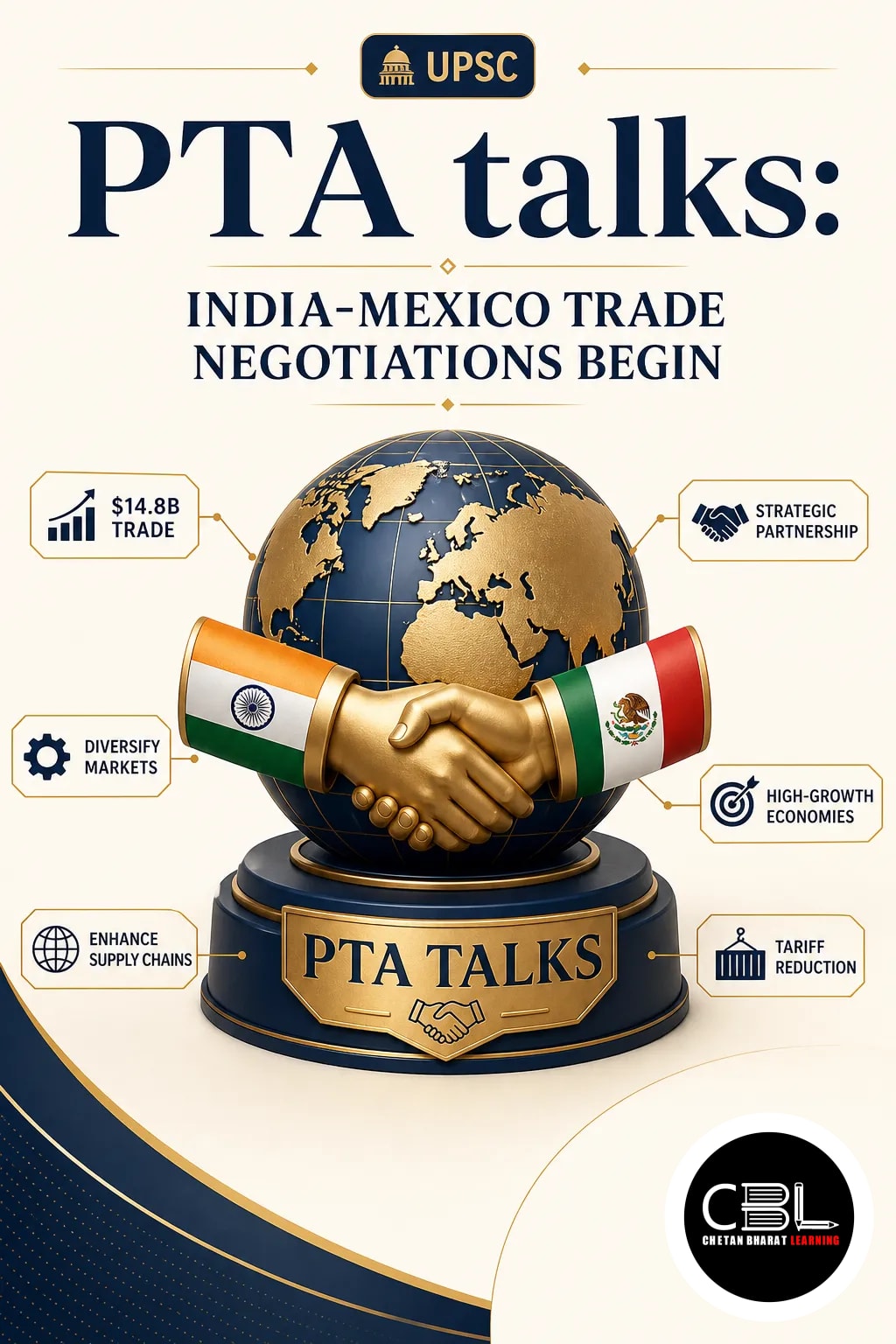

PTA talks between India and Mexico have begun, with both sides signing terms of reference for negotiations. For context, see our note on trade-related current affairs coverage.
What is PTA talks?
A Preferential Trade Agreement is a limited trade pact that lowers tariffs on selected goods rather than covering all trade. In these PTA talks, India and Mexico are setting the framework, scope, and negotiation process.
The talks matter because they can improve market access, support investment, and strengthen supply chains. India sees Mexico as a useful partner in sectors such as automobiles, chemicals, electronics, pharmaceuticals, agriculture, and advanced manufacturing.
Why in News?
The two countries signed terms of reference for the negotiations, which formally begins the PTA process. The move follows discussions between Indian and Mexican leaders during the G7 summit in Canada in June 2025.
The agreement on terms of reference also identifies the main negotiation areas. These include market access for goods, rules of origin, customs procedures, trade facilitation, dispute settlement, sanitary and phytosanitary measures, technical barriers to trade, and trade remedies.
Key Features
- Framework for negotiation: The terms of reference define the scope, methods, and work plan for the discussions.
- Selective tariff preference: The proposed pact aims to create trade benefits for chosen product lines rather than full tariff elimination.
- Broader economic linkages: Both sides want stronger business ties, higher trade flows, and deeper investment links.
- Supply chain resilience: A more diverse supply chain can reduce dependence on narrow sourcing channels.
- Sectoral opportunities: The text highlights autos, chemicals, electronics, pharma, agri-food, energy, critical minerals, medical devices, and advanced manufacturing.
- B2B engagement: The two sides discussed sending a Mexican trade delegation to India in early 2027.
Challenges
- Balancing interests: Both countries must protect sensitive sectors while still giving enough market opening.
- Rules of origin: Trade preferences can be misused if origin rules are weak or hard to enforce.
- Standards and compliance: Sanitary, phytosanitary, and technical barriers may slow actual trade gains.
- Dispute management: A workable settlement mechanism is needed to handle trade frictions.
- Implementation gap: Negotiated benefits will matter only if firms can use them easily.
Way Forward
India can use the negotiations to seek easier access for labour-intensive and high-value exports. Mexico, in turn, can benefit from wider entry into the Indian market for competitive industrial goods.
The next step should be a clear timetable, regular consultations, and sector-specific engagement with industry. That approach can help the PTA talks move from a diplomatic announcement to a practical trade instrument.
Source: PIB, 28 October 2026
- US Canada Tariffs: Retaliatory Trade Moves, UPSC Notes (29 Aug 2026)
This topic is useful for questions on foreign trade policy, bilateral economic diplomacy, and India’s integration with global value chains. It can also appear in state PCS answers on industrial policy, export promotion, and how trade agreements affect domestic manufacturing and agriculture.
FAQ
How is a PTA different from an FTA?
A PTA grants tariff preferences on selected goods, while an FTA usually aims for much broader liberalisation. PTAs are often a first step before deeper trade negotiations.
Why are rules of origin important in trade agreements?
They decide whether a product truly qualifies for preferential treatment. Weak rules can allow third-country goods to route through a partner country and still claim benefits.
Why does India view Mexico as strategically useful?
Mexico offers access to North American-linked supply chains and a large industrial market. The source also notes opportunities in manufacturing, pharma, electronics, and critical minerals.
Related Current Affairs
Preparing for UPSC, PCS or HCS?
Talk to a mentor at Chetan Bharat Learning, Chandigarh. Free guidance on choosing the right exam and building a study plan.
Chat on WhatsAppCall 97793 53345UPSC / IAS / PCS coaching in Chandigarh · Trusted by aspirants across Punjab & Haryana
Leave a Reply
You must be logged in to post a comment.