
UPSC Syllabus Mapping
| GS Paper | GS-II |
|---|---|
| Subject | Indian Constitution, Fundamental Rights and Parliament |
What is Vande Mataram Bill?
The proposal highlighted in the passage seeks to create a legal framework concerning insults to Vande Mataram. It has emerged through a Private Member’s Bill rather than a government bill. A private member means a Member of Parliament who does not serve as a minister.
Private members can introduce legislative proposals in Parliament, although relatively few such bills become law. Nevertheless, these proposals can place emerging social and constitutional questions before the legislature. Consequently, their importance often extends beyond their immediate prospects of enactment.
The proposal must also be understood alongside the Prevention of Insults to National Honour Act, 1971. That law protects specified national symbols, including the Indian National Flag and the Constitution, and contains provisions relating to the National Anthem. However, the legal treatment of Vande Mataram is distinct from that of the National Anthem.
This distinction matters for constitutional analysis. Vande Mataram enjoys immense historical and national significance, yet aspirants should not assume that every national symbol has an identical statutory or constitutional status. Therefore, any proposal to create criminal liability requires careful legislative drafting and scrutiny.
Why is Vande Mataram Bill in News?
The passage reports the introduction of a Private Member’s Bill concerning insults to Vande Mataram in the Lok Sabha. The proposal has attracted attention because it seeks to place protection of the National Song within a stronger legal framework. Consequently, Parliament may confront questions about how far criminal law should regulate conduct involving national symbols.
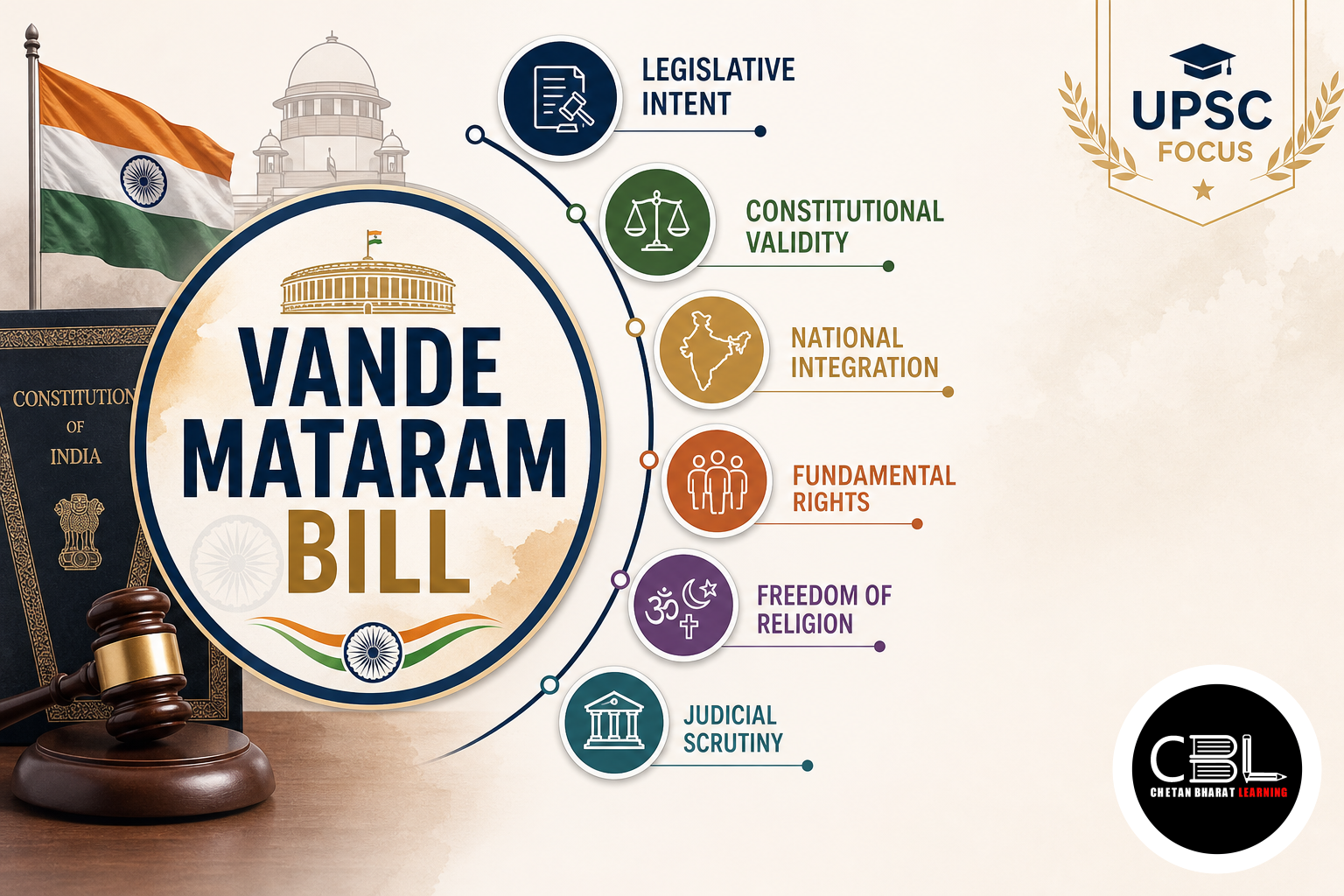
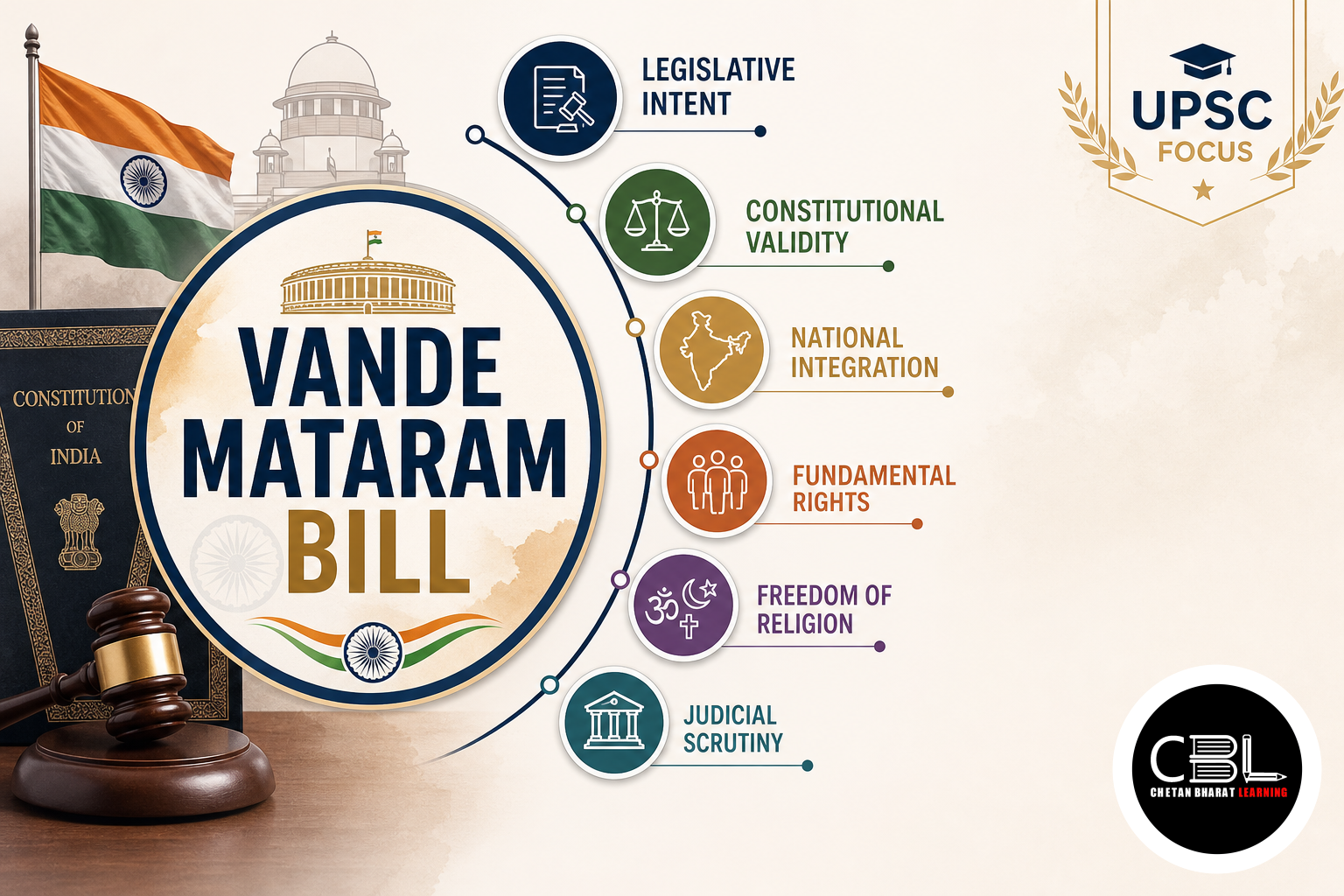
The development matters because national honour intersects with individual liberty. Article 19(1)(a) guarantees freedom of speech and expression, subject to reasonable restrictions under Article 19(2). Therefore, legislation affecting expressive conduct must operate within the grounds and safeguards recognised by the Constitution.
Religious freedom can also become relevant. Article 25 protects freedom of conscience and the right freely to profess, practise and propagate religion, subject to constitutional limitations. In addition, Article 21 protects life and personal liberty and supports broader constitutional values such as dignity and autonomy.
Aspirants should follow the legislative process rather than treat the introduction of a bill as enactment into law. The Parliament of India provides official information on parliamentary business. Notably, introduction represents only one stage in the legislative process.
Key Features
- Bankim Chandra Chattopadhyay composed Vande Mataram for his novel Anandamath, which became a powerful symbol of India’s anti-colonial movement.
- Jana Gana Mana, composed by Rabindranath Tagore, is India’s National Anthem, while Vande Mataram holds the status of National Song.
- Article 51A(a) lists Fundamental Duties, asking citizens to respect the Constitution, its ideals and institutions, the National Flag and the National Anthem; it does not expressly mention the National Song.
- Criminalisation must meet clarity and proportionality tests to avoid vague offences of insult or disrespect.
Challenges
- Balancing national honour with freedom of expression, distinguishing intentional desecration from lawful dissent.
- Respecting religious and conscientious objections where imagery in Vande Mataram may conflict with individual beliefs.
- Avoiding vague criminal provisions to prevent enforcement inconsistencies and litigation.
- Ensuring proportionality so that restrictions bear a rational relationship to legitimate objectives without unduly burdening liberty.
- Considering education and civic awareness as alternatives to criminal penalties for promoting respect.
Way Forward
- Subject any proposal on national symbols to detailed constitutional scrutiny with precise definitions and intent requirements.
- Examine precedent such as Bijoe Emmanuel v. State of Kerala, protecting sincere religious non-participation in national rituals.
- Frame legislation to respect both collective symbols and individual freedoms, guided by clarity, proportionality and conscience.
- Consult judicial precedents and parliamentary debate to define objective and scope of any proposed offence.
Prelims Practice Corner
- Vande Mataram was composed by: Bankim Chandra Chattopadhyay.
- Vande Mataram originally appeared in which literary work? It appeared in Anandamath.
- Article 19(1)(a) relates to: Freedom of speech and expression.
- Which Article contains the Fundamental Duties? Article 51A.
- With reference to Article 51A(a), which statements are correct?
(1) It mentions the National Flag.
(2) It mentions the National Anthem.
(3) It expressly mentions the National Song.
Answer: 1 and 2 only.
Mains Practice Questions
- National honour and freedom of expression need not be competing constitutional values. Discuss. (10 marks)
Outline: Explain national honour; discuss Articles 19 and 51A; introduce reasonable restrictions and proportionality; refer to freedom of conscience; conclude with a balanced constitutional approach. - Examine the constitutional issues involved in using criminal law to protect national symbols in India. (15 marks)
Outline: Introduce the objective of protecting national symbols; discuss Articles 19, 21, 25 and 51A; explain the Prevention of Insults to National Honour Act, 1971; use Bijoe Emmanuel as judicial linkage; assess clarity, proportionality and misuse; suggest narrowly tailored legislation.
FAQs on Vande Mataram Bill
Is Vande Mataram India’s National Anthem?
No. Jana Gana Mana is India’s National Anthem, while Vande Mataram is the National Song.
Does Article 51A expressly mention Vande Mataram?
No. Article 51A(a) asks citizens to respect the Constitution, its ideals and institutions, the National Flag and the National Anthem; it does not expressly mention the National Song.
Why is Bijoe Emmanuel relevant to this debate?
The Supreme Court protected students who respectfully stood but did not sing the National Anthem because of sincerely held religious beliefs. The case demonstrates how national respect can coexist with freedom of conscience.
Related Current Affairs
Preparing for UPSC, PCS or HCS?
Talk to a mentor at Chetan Bharat Learning, Chandigarh. Free guidance on choosing the right exam and building a study plan.
Chat on WhatsAppCall 97793 53345UPSC / IAS / PCS coaching in Chandigarh · Trusted by aspirants across Punjab & Haryana
Leave a Reply
You must be logged in to post a comment.