
📍 UPSC Syllabus Mapping
GS Paper: GS-II & GS-III
Subject: Urban Governance, Infrastructure & Sustainable Development
Syllabus Pointers: Urban Planning, Inclusive Infrastructure, Road Safety, Smart Cities, Sustainable Mobility.
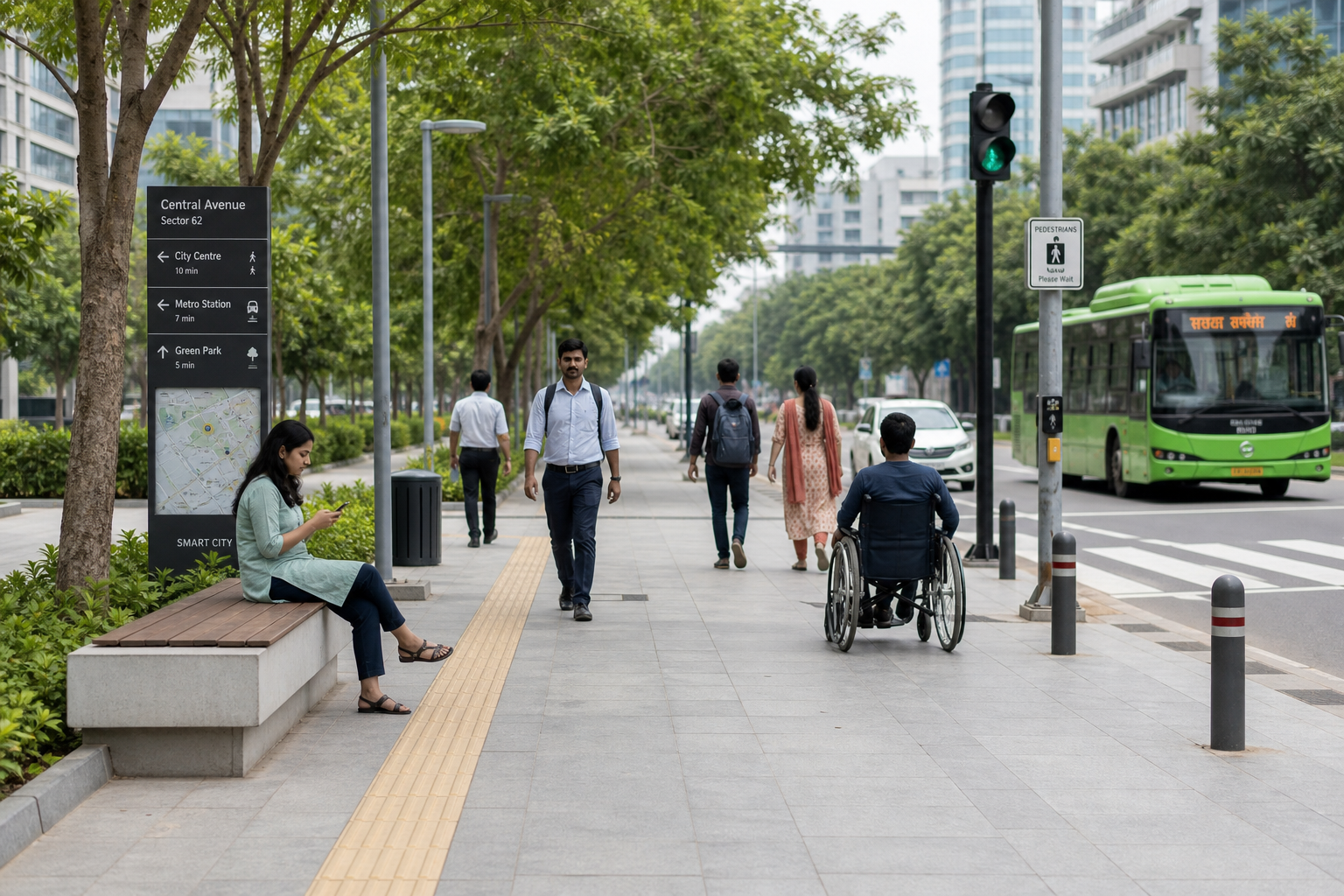
Why in News: Pedestrian Infrastructure has gained attention following an editorial highlighting the poor condition of footpaths in Indian cities and the need to recognize walking as a fundamental component of urban mobility. The discussion emphasizes that safe and accessible footpaths are essential for inclusive, sustainable and people-centric city planning.
What is Pedestrian Infrastructure?
Pedestrian Infrastructure refers to facilities designed for safe, convenient and barrier-free movement of people on foot. It includes footpaths, pedestrian crossings, skywalks, subways, tactile paving, ramps, street lighting, benches and universal accessibility features.
Why Are Footpaths Important?
- Ensure safe mobility for pedestrians.
- Reduce road accidents involving vulnerable road users.
- Support persons with disabilities, children and senior citizens.
- Promote healthier lifestyles through walking.
- Reduce traffic congestion, fuel consumption and air pollution.
Key Challenges in India
- Encroachment by vendors, parking and utilities.
- Poor design, uneven surfaces and lack of maintenance.
- Absence of universal accessibility standards.
- Weak coordination among urban local bodies and road agencies.
- Preference for motorized transport over pedestrian-friendly planning.
UPSC Significance
- Links urban governance with citizen-centric infrastructure.
- Supports Sustainable Development Goal (SDG) 11 on sustainable cities.
- Highlights inclusive development and universal accessibility.
- Relevant for Smart Cities Mission, AMRUT and road safety initiatives.
Static Linkages
- 74th Constitutional Amendment Act (Urban Local Bodies).
- Rights of Persons with Disabilities Act, 2016.
- Smart Cities Mission.
- AMRUT (Atal Mission for Rejuvenation and Urban Transformation).
- Sustainable Development Goal (SDG) 11.
Way Forward
Urban planning should prioritize pedestrians through continuous, obstruction-free and universally accessible footpaths. Integrating complete street principles, strict enforcement against encroachments and better coordination among civic agencies will make Indian cities safer, healthier and more inclusive for all users.
Prelims Practice
Q1. Which Constitutional Amendment provided constitutional status to Urban Local Bodies?
(a) 73rd Amendment (b) 74th Amendment (c) 86th Amendment (d) 97th Amendment
Answer: (b)
Q2. Sustainable Development Goal (SDG) 11 primarily relates to:
(a) Climate Action (b) Quality Education (c) Sustainable Cities and Communities (d) Affordable Energy
Answer: (c)
Mains Practice Question
“Pedestrian-friendly cities are essential for inclusive urban development and sustainable mobility.” Examine the major challenges in improving pedestrian infrastructure in India and suggest suitable reforms. (150 Words, 10 Marks)
Quick Revision
| Aspect | Details |
|---|---|
| Topic | Pedestrian Infrastructure |
| GS Paper | GS-II & GS-III |
| Core Theme | Urban Governance & Sustainable Mobility |
| Related Schemes | Smart Cities Mission, AMRUT |
| Relevant SDG | SDG 11 – Sustainable Cities and Communities |
Related Current Affairs
Preparing for UPSC, PCS or HCS?
Talk to a mentor at Chetan Bharat Learning, Chandigarh. Free guidance on choosing the right exam and building a study plan.
Chat on WhatsAppCall 97793 53345UPSC / IAS / PCS coaching in Chandigarh · Trusted by aspirants across Punjab & Haryana
Leave a Reply
You must be logged in to post a comment.