
Important for:
UPSC, Haryana HCS, Punjab PCS
Prelims: Agni Missile, MIRV Technology, DRDO
Mains: GS Paper 3 — Defence Technology, Internal Security, Strategic Capabilities
Why in News?
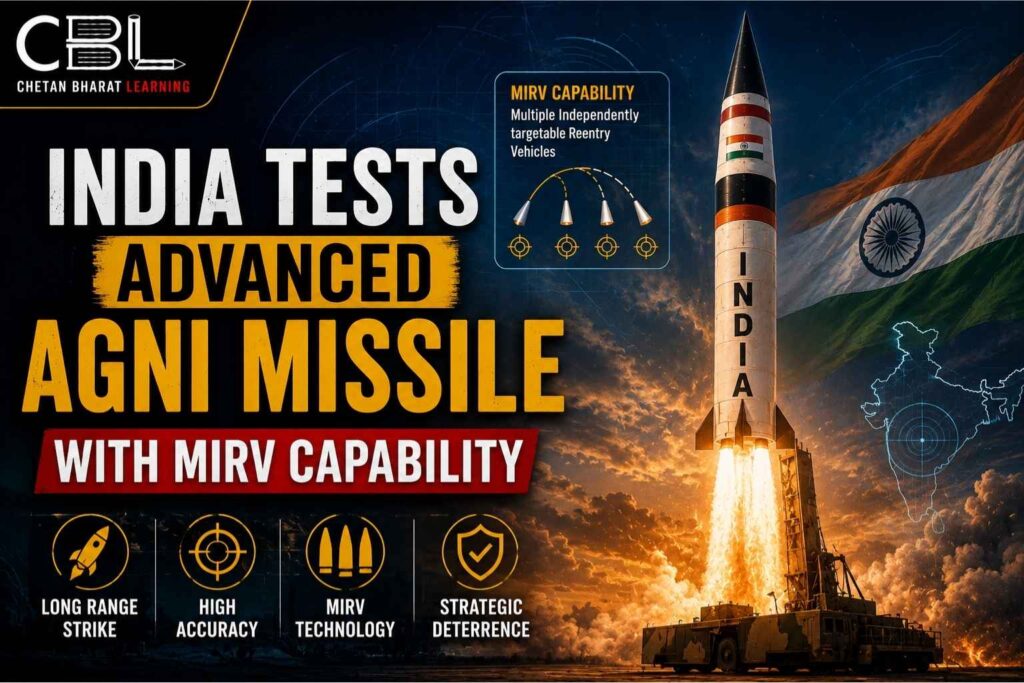
India successfully tested an:
Advanced Agni missile equipped with MIRV technology
marking a major milestone in India’s strategic defence capability.
The missile can:
→ Deploy multiple warheads at different targets simultaneously.
What is MIRV Technology?
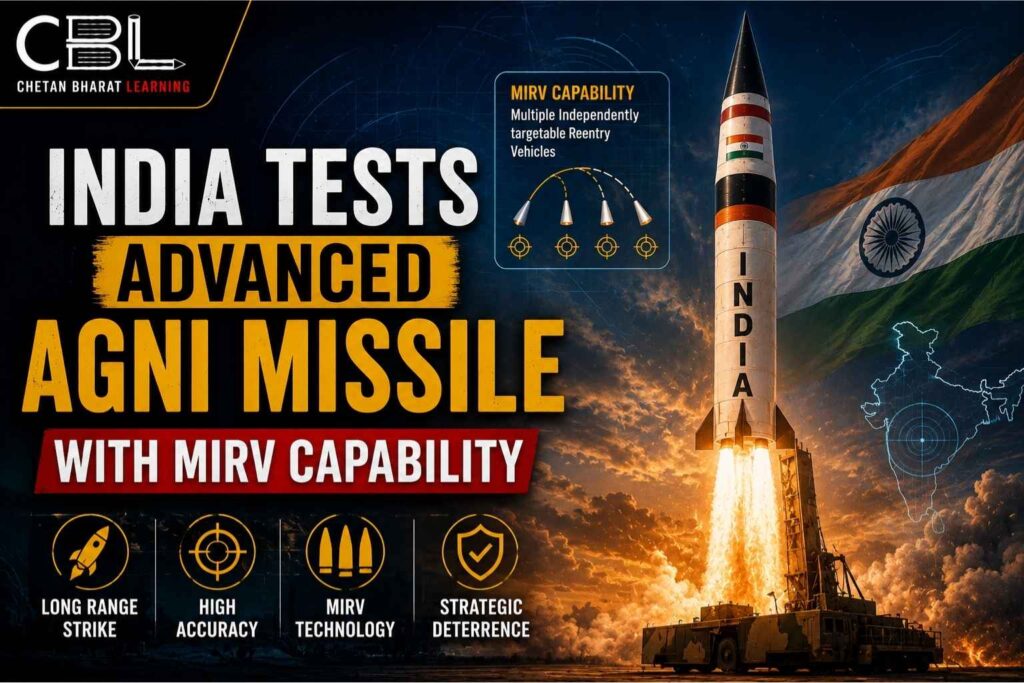
MIRV = Multiple Independently Targetable Re-entry Vehicle
It allows:
✔ One missile
to carry
✔ Multiple nuclear or conventional warheads
which can strike:
→ Different targets independently.
Why Is MIRV Important?
1. Multiple Target Capability
One missile can hit:
✔ Several locations simultaneously
2. Stronger Nuclear Deterrence
Enhances:
→ Strategic strike capability
3. Difficult to Intercept
Enemy missile defence systems face:
✔ Greater difficulty stopping multiple warheads
4. Global Strategic Status
Places India among:
→ Select technologically advanced military powers
About the Agni Missile Series
The:
Agni missiles
are India’s:
✔ Long-range ballistic missiles
developed under:
→ DRDO’s Integrated Guided Missile Programme.
Who Conducted the Test?
The successful test involved:
✔ DRDO
✔ Indian Army
✔ Defence industry partners
Telemetry and tracking were done through:
→ Ground and ship-based systems.
India’s Defence Significance
The successful MIRV test strengthens:
✔ Strategic deterrence
✔ National security
✔ Defence preparedness
✔ Indigenous defence technology
Global Importance
Countries with MIRV capability gain:
✔ Enhanced second-strike capability
✔ Strategic military advantage
✔ Stronger deterrence posture
Mission Divyastra
The test was reportedly conducted under:
‘Mission Divyastra’
to validate:
→ MIRV deployment technology.
Special Note for Aspirants
Students preparing through:
UPSC coaching Chandigarh
or
IAS coaching Chandigarh
should focus on:
✔ Ballistic missile systems
✔ Nuclear deterrence
✔ DRDO technologies
✔ Defence modernisation
✔ India’s strategic security architecture
These topics are highly important for:
→ GS3 + Essay + Interview.
Key Insight for UPSC
→ Modern warfare increasingly depends on:
✔ Advanced missile systems
✔ Indigenous defence production
✔ Strategic deterrence capability
PRELIMS PRACTICE QUESTIONS
Q1. MIRV stands for:
A. Multiple Independent Radar Vehicle
B. Multiple Independently Targetable Re-entry Vehicle
C. Missile Integrated Radar Vehicle
D. None
→ Answer: B
Q2. Agni missiles are mainly:
A. Surface-to-air missiles
B. Ballistic missiles
C. Cruise missiles
D. Anti-tank missiles
→ Answer: B
Q3. DRDO stands for:
A. Defence Research and Development Organisation
B. Department of Research and Defence Operations
C. Defence Radar Development Office
D. None
→ Answer: A
Q4. MIRV technology allows:
A. One missile to carry multiple warheads
B. Faster aircraft movement
C. Underwater missile launch
D. Satellite communication
→ Answer: A
Q5. Agni missile tests are linked with:
A. Agriculture policy
B. Strategic deterrence
C. Health infrastructure
D. River management
→ Answer: B
CBL Mains Practice Question
“India’s growing missile and defence technology capabilities are reshaping its strategic deterrence posture.”
Discuss with reference to MIRV technology and the Agni missile programme.
FAQs
1. What is MIRV technology?
It allows one missile to carry multiple independently targetable warheads.
2. Who developed the Agni missile?
DRDO developed the Agni missile series.
3. Why is MIRV important?
It strengthens strategic deterrence and defence capability.
4. What is Mission Divyastra?
It is linked with India’s MIRV missile capability testing.
5. Which GS paper covers this topic?
GS Paper 3.
Related Current Affairs
Preparing for UPSC, PCS or HCS?
Talk to a mentor at Chetan Bharat Learning, Chandigarh. Free guidance on choosing the right exam and building a study plan.
Chat on WhatsAppCall 97793 53345UPSC / IAS / PCS coaching in Chandigarh · Trusted by aspirants across Punjab & Haryana
Leave a Reply
You must be logged in to post a comment.