
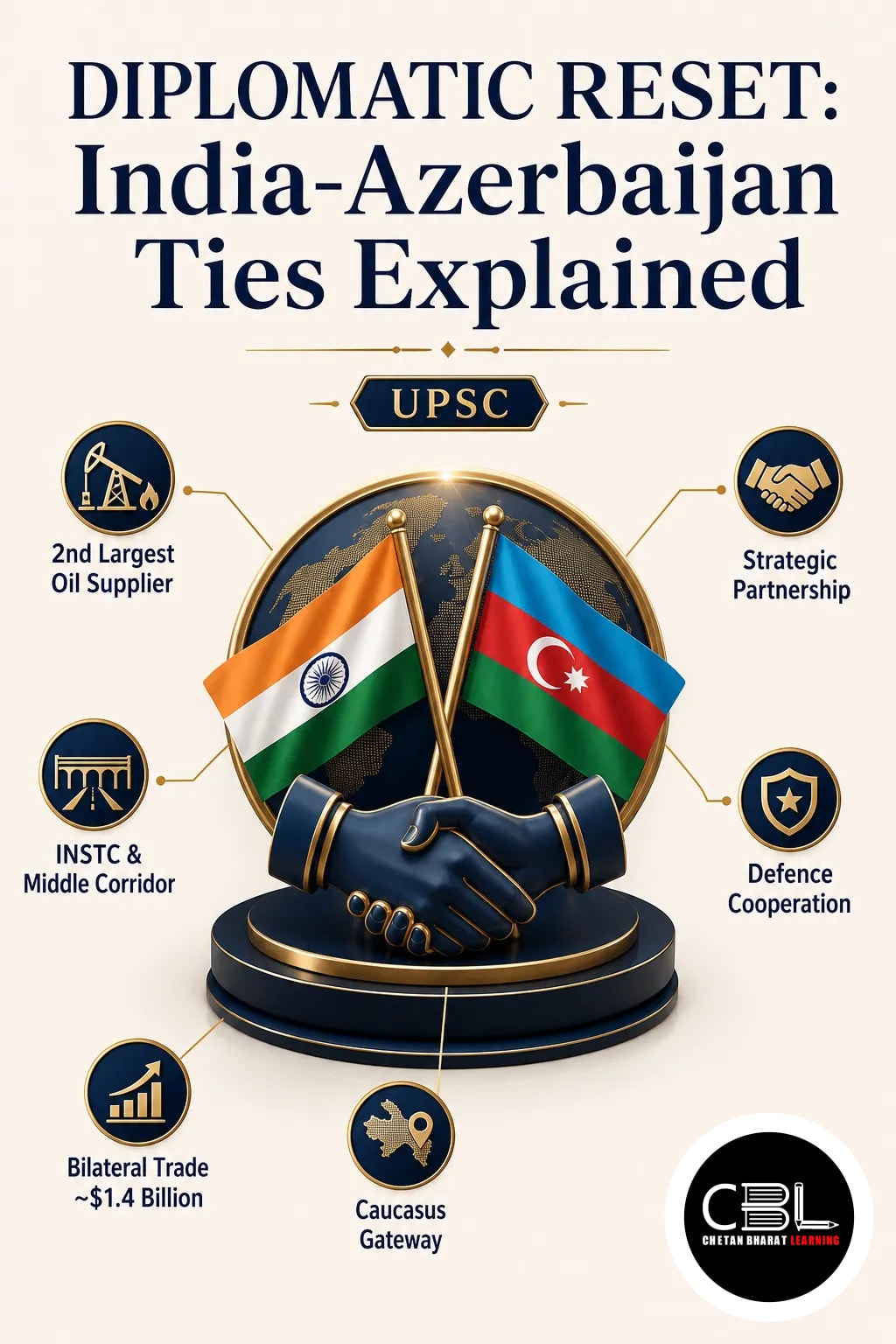
diplomatic reset in India-Azerbaijan ties has drawn attention after the reported fallout linked to recent bilateral friction. The episode shows how security events can quickly affect external engagements, trade comfort, and diplomatic messaging.
What is diplomatic reset?
In foreign policy, a diplomatic reset means restoring working engagement after a phase of strain. It usually involves quiet contact, public signalling, and a return to practical cooperation.
For India, this often matters when political tensions risk affecting trade, connectivity, energy, or multilateral coordination. A reset does not erase disagreement, but it can reopen channels for dialogue.
Why in News?
The report says India and Azerbaijan are looking to normalise ties after the fallout linked to Operation Sindoor. The development suggests both sides see value in stabilising the relationship despite recent friction.
Such a move matters because India uses engagement with West Asian and Caucasus partners to support broader diplomatic interests. It also reflects the tendency of states to separate immediate political disputes from longer-term strategic needs.
Key Features
- Repair through dialogue: A reset depends on rebuilding communication lines rather than public escalation.
- Practical focus: Governments often begin with low-cost steps such as meetings, statements, or working-level contact.
- Strategic caution: Both sides usually avoid making the dispute wider than necessary.
- Issue management: The aim is to preserve bilateral cooperation even when one event creates political discomfort.
Challenges
- Public perceptions: Domestic opinion can harden after a foreign policy disagreement, making compromise harder.
- Trust deficit: Once strained, diplomatic confidence takes time to rebuild.
- Message discipline: Competing official narratives can delay reconciliation.
- External alignments: Bilateral ties can be influenced by the partner country’s relations with other regional actors.
Way Forward
India and Azerbaijan can prioritise quiet diplomacy, consistent messaging, and issue-based engagement. That approach helps separate a temporary setback from the larger bilateral agenda.
For exam purposes, the case shows how India manages relations through strategic autonomy, flexible diplomacy, and calibrated public communication. It also highlights the importance of keeping regional partnerships functional during periods of tension.
Source: Indian Express India, 2026-10-24
This topic is useful for General Studies on international relations and India’s neighbourhood and extended neighbourhood policy. State PCS aspirants should understand how external tensions can affect trade, diaspora concerns, and India’s diplomatic options.
FAQ
Why does a diplomatic reset matter for UPSC?
It tests how India manages tensions while protecting strategic interests. Such cases also help in understanding foreign policy tools like dialogue, signalling, and calibrated engagement.
Is diplomatic reset the same as a formal apology?
No. A reset can happen through quiet engagement, practical cooperation, or reduced rhetoric. It does not always require public contrition.
How should aspirants write about this issue in Mains?
Link the event to India’s strategic autonomy, bilateral diplomacy, and regional outreach. Then explain how states balance immediate disagreements with long-term cooperation.
Related Current Affairs
Preparing for UPSC, PCS or HCS?
Talk to a mentor at Chetan Bharat Learning, Chandigarh. Free guidance on choosing the right exam and building a study plan.
Chat on WhatsAppCall 97793 53345UPSC / IAS / PCS coaching in Chandigarh · Trusted by aspirants across Punjab & Haryana
Leave a Reply
You must be logged in to post a comment.