
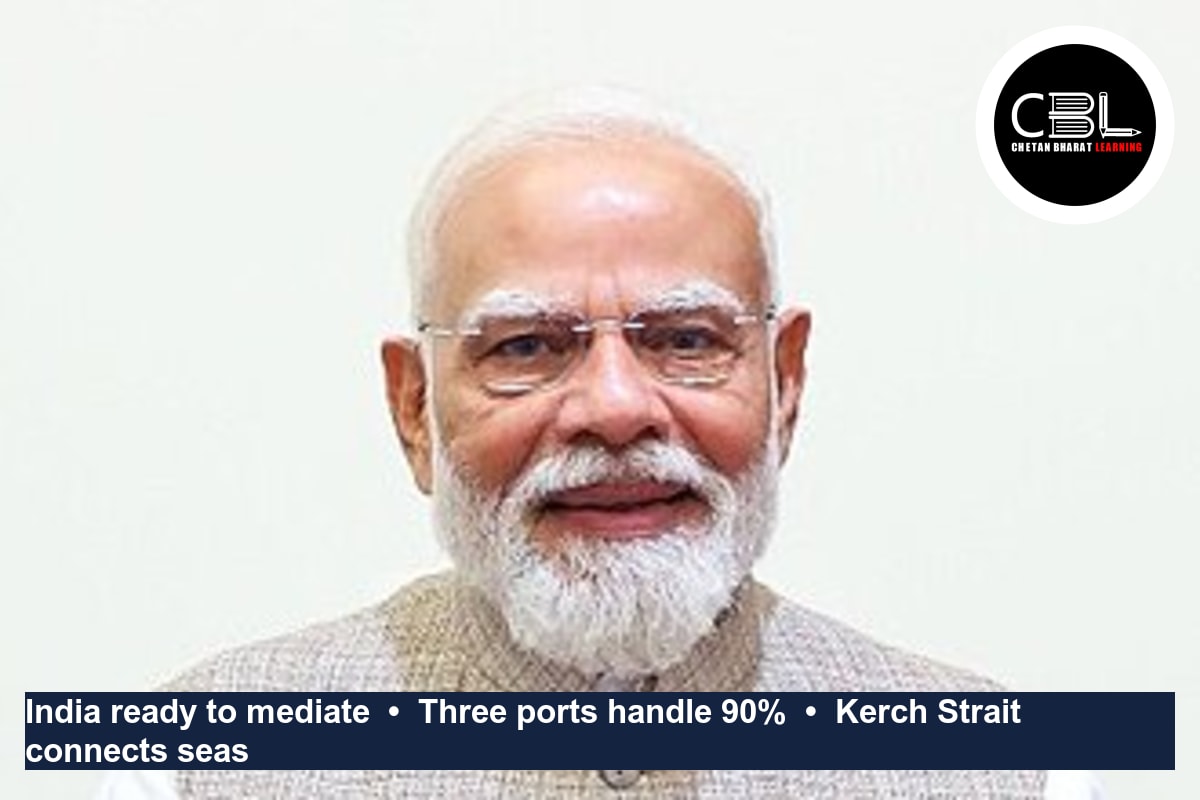
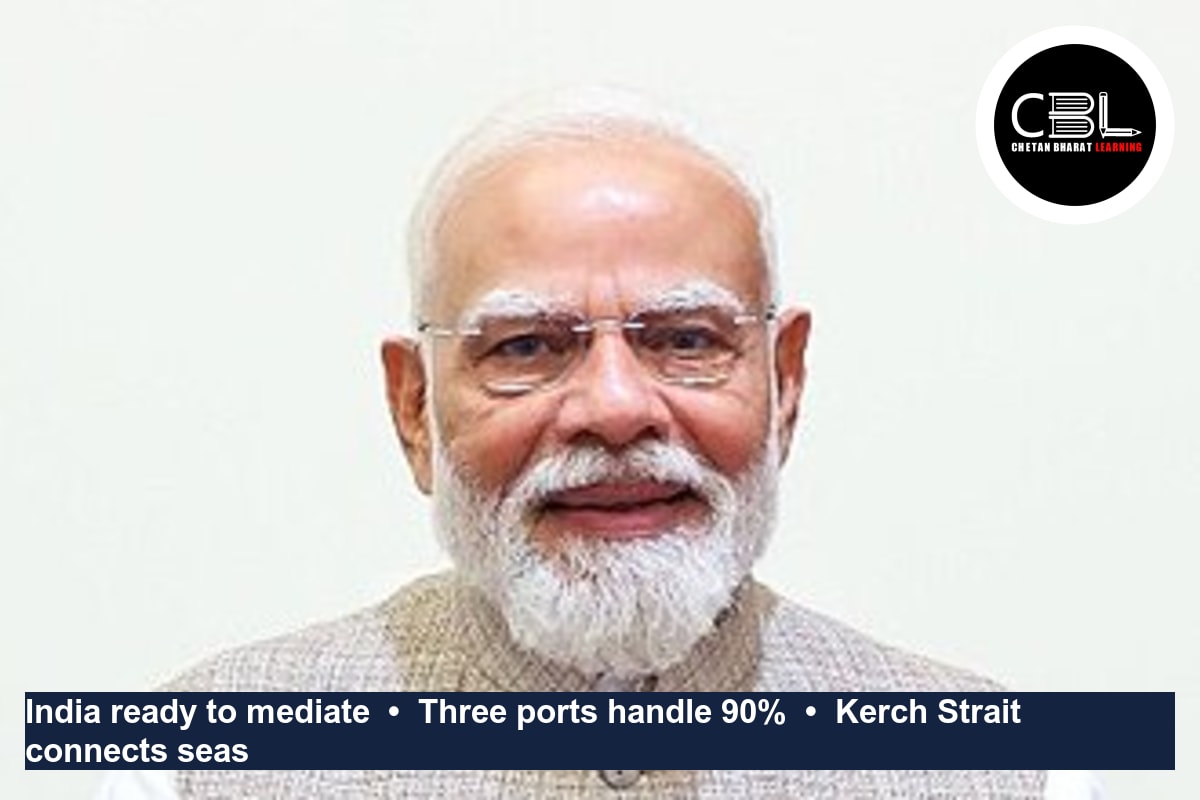
Photo: Narendra Modi, via Wikimedia Commons
Black Sea food corridors featured in Prime Minister Narendra Modi’s call with Ukrainian President Volodymyr Zelenskyy. The conversation places maritime access and food security within India’s wider international relations agenda.
Quick answer: After speaking to Modi on 9 November 2026, Zelenskyy said India was ready to mediate on Black Sea food corridors. The outreach came before US-brokered Russia-Ukraine talks in Abu Dhabi. Three Ukrainian ports in the Greater Odesa region handle around 90% of Ukraine’s agricultural exports, according to the source.
What happened in the diplomatic outreach?
India contacted both Ukrainian and Russian leaders ahead of the two-day peace talks in Abu Dhabi. Modi spoke to Zelenskyy, while External Affairs Minister S Jaishankar spoke to Russian Foreign Minister Sergey Lavrov about the conflict and diplomatic initiatives.
Zelenskyy said he and Modi discussed Russia’s blocking of grain exports through the Black Sea. He also said India was ready to mediate in establishing food corridors, and that their teams would remain in contact.
Meanwhile, Modi reaffirmed India’s commitment to contributing towards a peaceful resolution. The leaders also reviewed bilateral cooperation and discussed the conflict’s humanitarian aspects.
The statement describes a possible Indian mediating role; it does not establish that a corridor or ceasefire has been agreed. Likewise, the source describes the Abu Dhabi meeting as forthcoming, not as producing an outcome.
What are the proposed elements of the outreach?
The reported Indian proposal combines safer shipping with other measures to reduce fighting. Its broad contours include the following elements:
- Maritime access: Easing fighting in the Black Sea region could allow Ukrainian agricultural products to reach world markets.
- Energy infrastructure: The proposal envisages Russia halting attacks on Ukrainian energy infrastructure.
- Line of contact: It also envisages Ukraine refraining from attacks on Russian positions along that line.
Earlier, Jaishankar said India was engaging both countries on shipping safety, grain and energy exports, and possibilities for non-attack arrangements. In addition, Ukrainian Foreign Minister Andrii Sybiha had described India’s peace proposal as broad and comprehensive.
A food corridor would depend on safe passage through a conflict-affected route. However, the source does not specify an agreed route, monitoring mechanism or timetable.
Why does the Black Sea matter for food security?
The Black Sea region carries substantial Ukrainian and Russian agricultural exports. Consequently, attacks on ports and vessels can affect food supplies beyond the immediate conflict zone.
| Location or measure | Key fact from the source |
|---|---|
| Greater Odesa ports | Odesa, Chornomorsk and Pivdennyi handle around 90% of Ukraine’s agricultural exports. |
| Azov–Black Sea region | Approximately 42–44 million tonnes of Russian grain exports move through the region, or 77–81% of its total grain exports. |
| Kerch Strait | It connects the Sea of Azov with the Black Sea. |
| Food insecurity risk | The source estimates that fighting could place at least 400 million people across Africa, West Asia and Asia at risk of shortages, malnutrition and hunger. |
These figures show exposure to disrupted routes, not a count of people already facing shortages. Moreover, the port figure concerns agricultural exports broadly, while the Russian figure concerns grain exports.
Russia has targeted Ukrainian port facilities and vessel operations around Greater Odesa, according to the source. Meanwhile, Ukraine has increased attacks on grain vessels, maritime infrastructure and ports around the Sea of Azov and Kerch Strait since mid-July.
What is the significance for India?
The outreach gives India a potential role in linking diplomatic engagement with a specific humanitarian and economic concern. Food shipments offer a focused issue for dialogue, even while a wider settlement remains difficult.
First, contact with both sides creates channels through which India can communicate proposals. However, access to both governments does not itself guarantee their consent or establish India as an accepted mediator.
Second, safer trade routes would address a concern that extends beyond the two combatants. For India, the episode illustrates how food security, maritime safety and foreign policy can intersect.
Third, the conversation must be read alongside India’s wider interests in the region. For context, see CBL’s analysis of Russian oil imports and India’s energy diplomacy. These interests require India to manage relationships carefully while pursuing a peaceful resolution.
What are the main challenges?
The central challenge is converting an expression of readiness into a safe and mutually acceptable arrangement.
- Consent and trust: Both sides would need to accept the scope and operation of any proposed corridor.
- Security of passage: Attacks on ports, vessels and maritime infrastructure complicate assurances for shipping.
- Implementation: A workable arrangement would need clarity on routes, responsibilities and how compliance is checked.
- Wider conflict: Because the proposal also concerns energy infrastructure and the line of contact, progress may depend on negotiations beyond grain shipments.
In addition, a corridor’s humanitarian value would depend on sustained access rather than a single announcement. The public account provides no agreed enforcement or verification details.
What could be the way forward?
Continued dialogue with both sides could help identify limited measures that protect food shipments. First, negotiators could clarify the routes and activities covered by any arrangement.
Second, they could discuss how to communicate incidents and assess compliance. In addition, practical assurances for vessels and port operations would require the parties’ acceptance.
Finally, India can pursue the food-security issue alongside broader peace efforts without treating it as a substitute for a political settlement. Thus, the test is whether diplomatic contact produces safe and durable access.
Source: Indian Express, 10 November 2026
Asked in UPSC: Previous Year Questions
- UPSC CSE Prelims 2023 (GS Paper I): How many of these countries share a land border with Ukraine: Bulgaria, Czech Republic, Hungary, Latvia, Lithuania and Romania?
- UPSC CSE Mains 2022 (GS Paper IV): What ethical issues are crucial when launching and continuing a war? Illustrate and justify them with reference to the Russia-Ukraine war.
UPSC links the conflict to geography and ethics; therefore, revise both dimensions alongside current diplomacy.
State PCS General Studies may test the Black Sea’s geography and the implications of disrupted food trade. In addition, Mains answers can connect India’s diplomacy with food security and maritime access.
Prelims Practice Corner
Mains Practice Questions
Frequently Asked Questions
What did Zelenskyy say about India’s role in food corridors?
He said India was ready to mediate in establishing them. The statement followed his phone call with Modi and concerned grain exports through the Black Sea.
Has a Black Sea food corridor been agreed?
No agreement is established in the source. It describes a proposed mediating role, but gives no agreed route or timetable.
Which Ukrainian ports are important for agricultural exports?
Odesa, Chornomorsk and Pivdennyi are the three key ports identified. Together, the source says, they handle around 90% of Ukraine’s agricultural exports.
What does the Kerch Strait connect?
It connects the Sea of Azov and the Black Sea. Therefore, it is relevant to the geography of regional maritime routes.
Related Current Affairs
Preparing for UPSC, PCS or HCS?
Talk to a mentor at Chetan Bharat Learning, Chandigarh. Free guidance on choosing the right exam and building a study plan.
Chat on WhatsAppCall 97793 53345UPSC / IAS / PCS coaching in Chandigarh · Trusted by aspirants across Punjab & Haryana

 Ananya RanaIAS · AIR 60
 Aditya SharmaIAS · AIR 70
 Ria Kaur SethiIPS · AIR 89
 Aman AloonIRS · AIR 295
 Sumer Singh VirkIRS · AIR 335
 Shivani PanchalIAS

Leave a Reply
You must be logged in to post a comment.