UPSC Mapping
| Exam | Topics |
|---|---|
| Prelims | Indian Society / Geography / Environment |
| Mains | GS Paper 2 — Vulnerable Sections; GS Paper 3 — Environment |
Article
What is the Shompen Tribe?
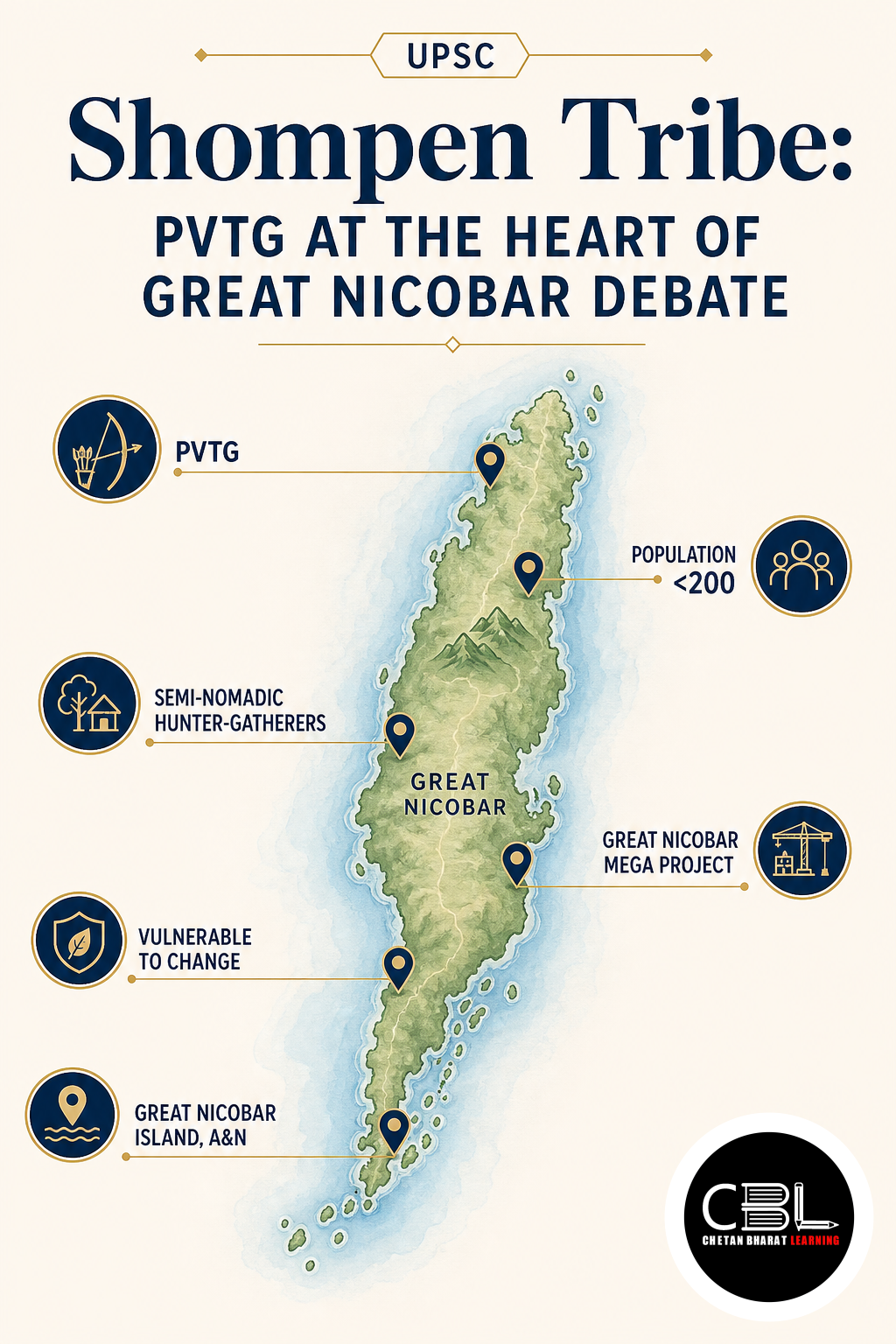
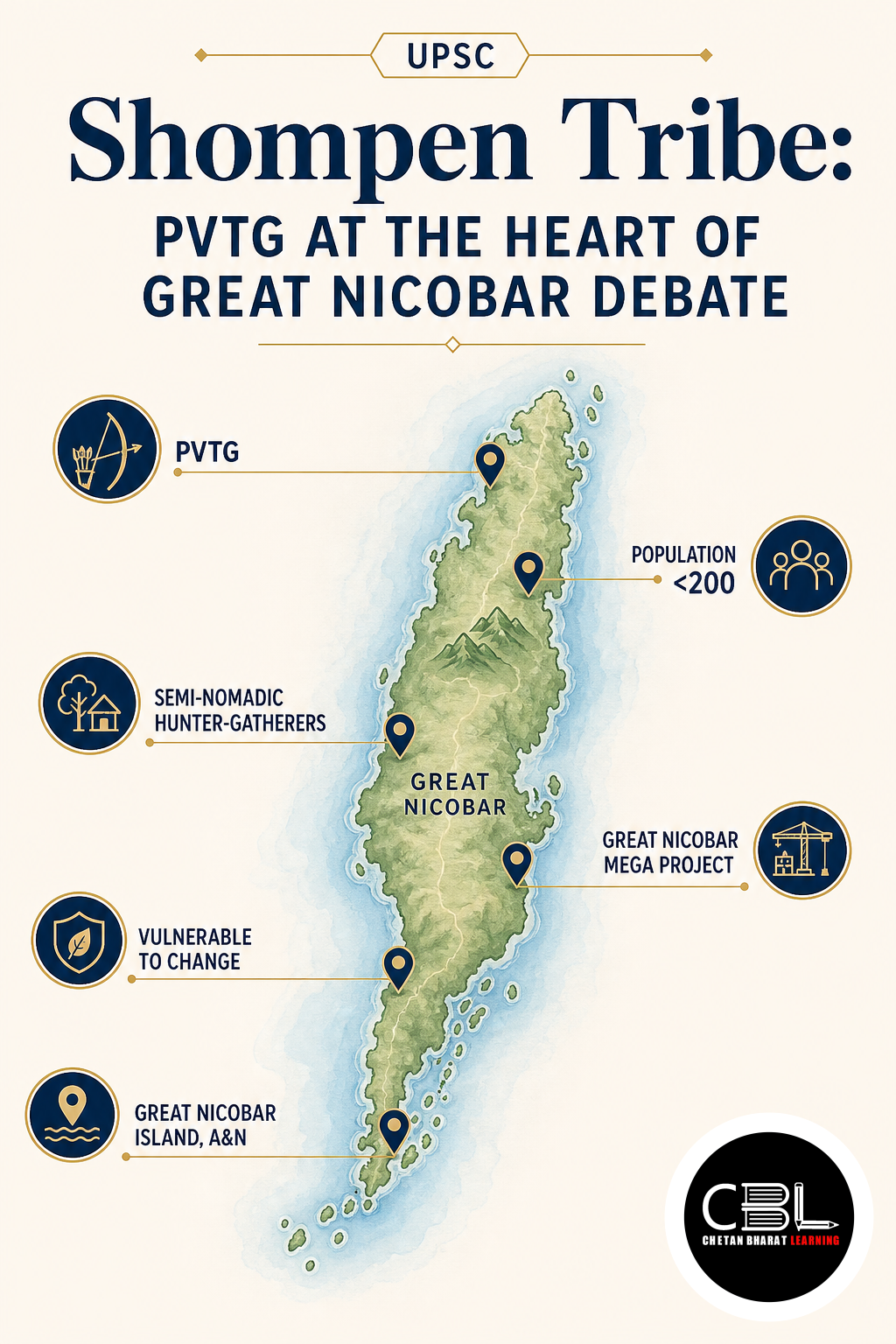
The Shompen Tribe inhabits the interior rainforests and river basins of Great Nicobar Island, India’s southernmost and ecologically richest island territory. They display Mongoloid physical traits, distinguishing them from the Negrito groups (Jarawas, Onges, Great Andamanese, Sentinelese) of the Andaman Islands. Shompen speak Shompenese, an Austroasiatic language, and sustain a nomadic hunter-gatherer lifestyle, foraging rainforest resources such as Pandanus fruit.
India classifies the Shompen as one of 75 Particularly Vulnerable Tribal Groups (PVTGs), denoting communities with stagnant populations, pre-agricultural technology, limited literacy and a subsistence economy. Their habitat falls within the Great Nicobar Biosphere Reserve. They are legally protected by the Andaman & Nicobar Islands (Protection of Aboriginal Tribes) Regulation, 1956, and Section 3(1)(e) of the Forest Rights Act, 2006, which guarantees Habitat Rights to PVTGs.
Why is the Shompen Tribe in News?
The Tribal Council of Great & Little Nicobar alleges that island authorities pressured the Shompen to abandon their traditional lifestyle for the Great Nicobar holistic development project. Proposed infrastructure—a transshipment port, international airport, township and power plant—overlaps the tribe’s habitat within the Biosphere Reserve. Critics argue that forced displacement breaches both the 1956 Regulation and the FRA’s habitat rights guarantee.
This issue intersects three UPSC themes: PVTG rights, environmental clearance processes and strategic infrastructure. Review the Ministry of Tribal Affairs’ framework at the MoTA official portal.
Key Features: Identity, Habitat and Legal Protections
- Mongoloid Ethnicity: Distinct from Negrito Andaman tribes; linked anthropologically to Southeast Asia via the Malay Archipelago.
- Austroasiatic Language: Shompenese is fragmented and not mutually intelligible with other Austroasiatic tongues.
- Pandanus-Foraging Economy: Subsistence centers on Pandanus fruit, hunting and fishing; settled life undermines their livelihood.
- 1956 Regulation: Restricts entry into Shompen territory, prohibits exploitative trade and criminalises unsanctioned contact.
- FRA 2006 Habitat Rights: Section 3(1)(e) vests PVTGs with rights over their entire ecological territory.
Challenges to Shompen Survival and Rights
- Development Overlap: Project footprints intersect Biosphere Reserve and foraging routes, risking habitat fragmentation.
- Forced Contact: Administrative pressure to settle breaches constitutional dignity guarantees and the 1956 Regulation.
- Disease Vulnerability: No immunity to common pathogens; unsanctioned contact could trigger epidemics.
- Non-Implementation of Habitat Rights: Without formal notification, territorial claims lack legal enforceability.
- Data Deficit: Small, poorly enumerated population; any demographic loss risks functional extinction.
Way Forward
The government must notify Shompen Habitat Rights under FRA Section 3(1)(e) before any development. An independent anthropological impact assessment, separate from environmental clearance, should evaluate effects on foraging patterns and psychological well-being. Free, prior and informed consent per UNDRIP is essential.
Strategic infrastructure need not conflict with tribal survival if planners adopt exclusion-zone frameworks around foraging routes. The Supreme Court’s oversight provides judicial accountability. Review the 1956 Regulation text at the Andaman & Nicobar administration portal.
Prelims Practice Corner
Q1. The Shompen Tribe inhabits which of the following islands?
- (a) North Sentinel Island
- (b) Little Andaman
- (c) Great Nicobar Island
- (d) Havelock Island
Answer: (c) Great Nicobar Island.
Q2. The Shompen Tribe belongs to which racial group?
- (a) Negrito
- (b) Australoid
- (c) Mongoloid
- (d) Caucasoid
Answer: (c) Mongoloid.
Q3. Habitat Rights for PVTGs are guaranteed under which provision of the Forest Rights Act, 2006?
- (a) Section 2(i)
- (b) Section 3(1)(c)
- (c) Section 3(1)(e)
- (d) Section 4(5)
Answer: (c) Section 3(1)(e).
Q4. Shompenese language belongs to which language family?
- (a) Dravidian
- (b) Sino-Tibetan
- (c) Austroasiatic
- (d) Indo-Aryan
Answer: (c) Austroasiatic.
Q5. Which regulation specifically protects the Shompen and other Aboriginal tribes of the Andaman and Nicobar Islands from exploitation?
- (a) The Scheduled Tribes (Recognition of Forest Rights) Act, 2006
- (b) The Andaman and Nicobar Islands (Protection of Aboriginal Tribes) Regulation, 1956
- (c) The Wildlife Protection Act, 1972
- (d) The Environment Protection Act, 1986
Answer: (b) The Andaman and Nicobar Islands (Protection of Aboriginal Tribes) Regulation, 1956.
Mains Practice Questions
Q1. The rights of the Shompen Tribe are protected by multiple laws, yet development pressures on Great Nicobar continue. Examine the tension between strategic infrastructure and indigenous rights. (250 words)
Answer Structure:
- Intro: Situate the Shompen—Mongoloid PVTG on Great Nicobar—and the holistic development project as the conflict context.
- Body:
- Legal protections: 1956 Regulation, FRA Section 3(1)(e) Habitat Rights, UNDRIP.
- Development risks: habitat fragmentation, disease vulnerability, forced contact, non-notification of Habitat Rights.
- Strategic interest: maritime security and trade.
- Conclusion: Habitat exclusion zones, anthropological impact assessments and Habitat Rights notification can reconcile development with tribal survival.
Q2. “PVTGs in India remain the most invisible citizens despite the most robust legal protections.” Critically analyse. (150 words)
Answer Structure:
- Intro: India’s 75 PVTGs have strong legal protections but face declining populations and marginalisation.
- Body:
- Legal framework: FRA Habitat Rights, 1956 Regulation, PM-JANMAN.
- Implementation gap: unnotified Habitat Rights, poor enumeration, disease risk.
- Case study: Shompen’s structural invisibility under development pressure.
- Conclusion: Mandatory Habitat Rights notification must precede any infrastructure clearance in PVTG territories.
FAQs on the Shompen Tribe
How do the Shompen differ from other Andaman and Nicobar tribes?
The Shompen are Mongoloid and inhabit Great Nicobar Island, whereas the Jarawa, Onge, Sentinelese and Great Andamanese are Negrito groups of the Andaman Islands. Shompen speak an Austroasiatic language and follow a nomadic foraging ecology, setting them apart.
What are Habitat Rights and why are they critical for the Shompen?
Habitat Rights under FRA Section 3(1)(e) recognise the entire ecosystem—forests, rivers, seasonal foraging grounds—indispensable to a PVTG’s survival. For the nomadic Shompen, formal notification would create a legally enforceable exclusion zone against development encroachment.
What is the Great Nicobar Biosphere Reserve and why is it significant?
The Great Nicobar Biosphere Reserve, a UNESCO-recognised area, harbours exceptional biodiversity—including Leatherback Sea Turtle nesting sites and endemic species—alongside Shompen territory. Any large-scale infrastructure here raises simultaneous environmental and indigenous rights concerns.
Related Current Affairs
Preparing for UPSC, PCS or HCS?
Talk to a mentor at Chetan Bharat Learning, Chandigarh. Free guidance on choosing the right exam and building a study plan.
Chat on WhatsAppCall 97793 53345UPSC / IAS / PCS coaching in Chandigarh · Trusted by aspirants across Punjab & Haryana
Leave a Reply
You must be logged in to post a comment.