
UPSC Mapping
| Prelims | ALT, SGPT, Liver Function Test (LFT) |
|---|---|
| Mains | GS Paper III – Science & Technology, Public Health |
Article
What is Alanine Aminotransferase?
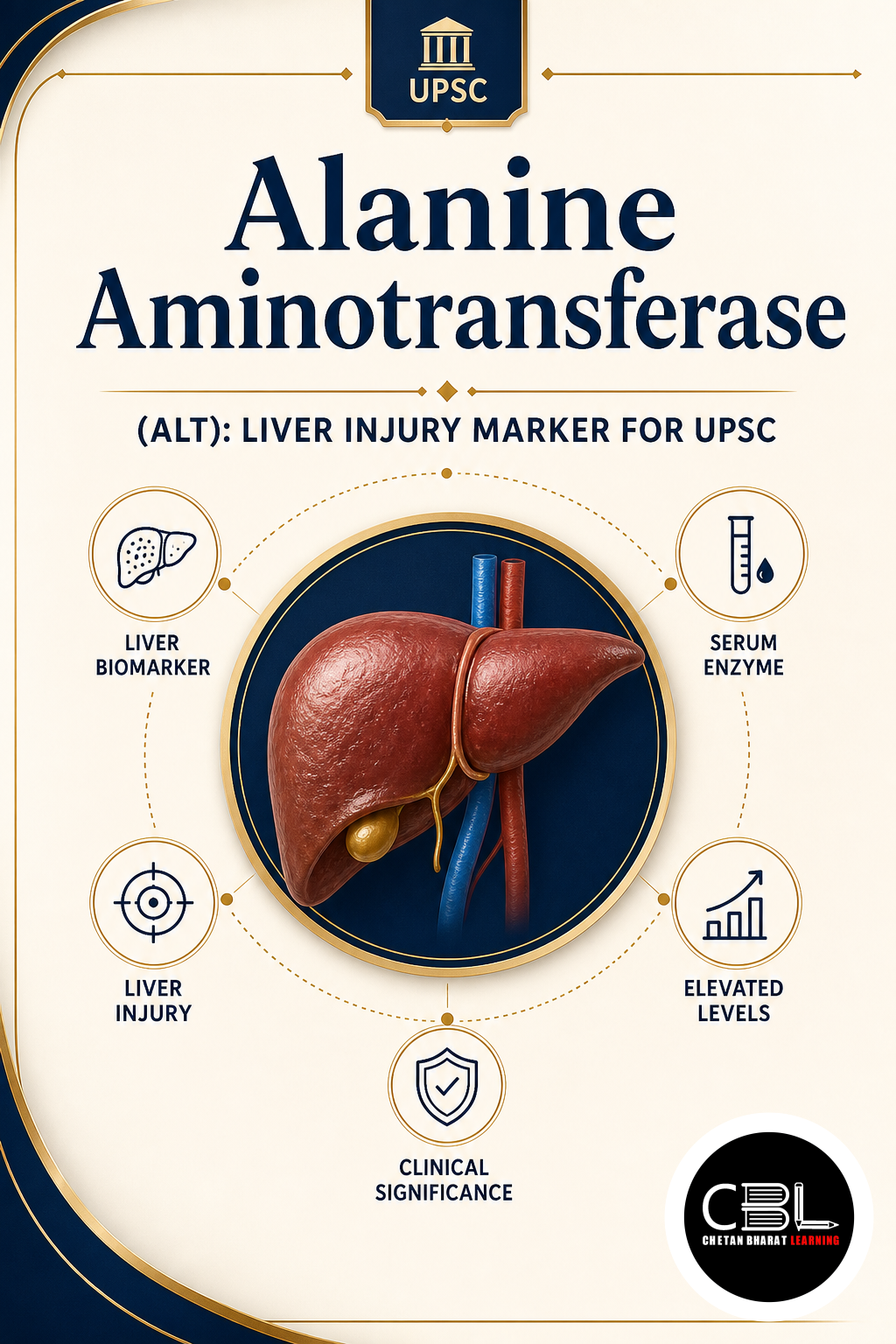
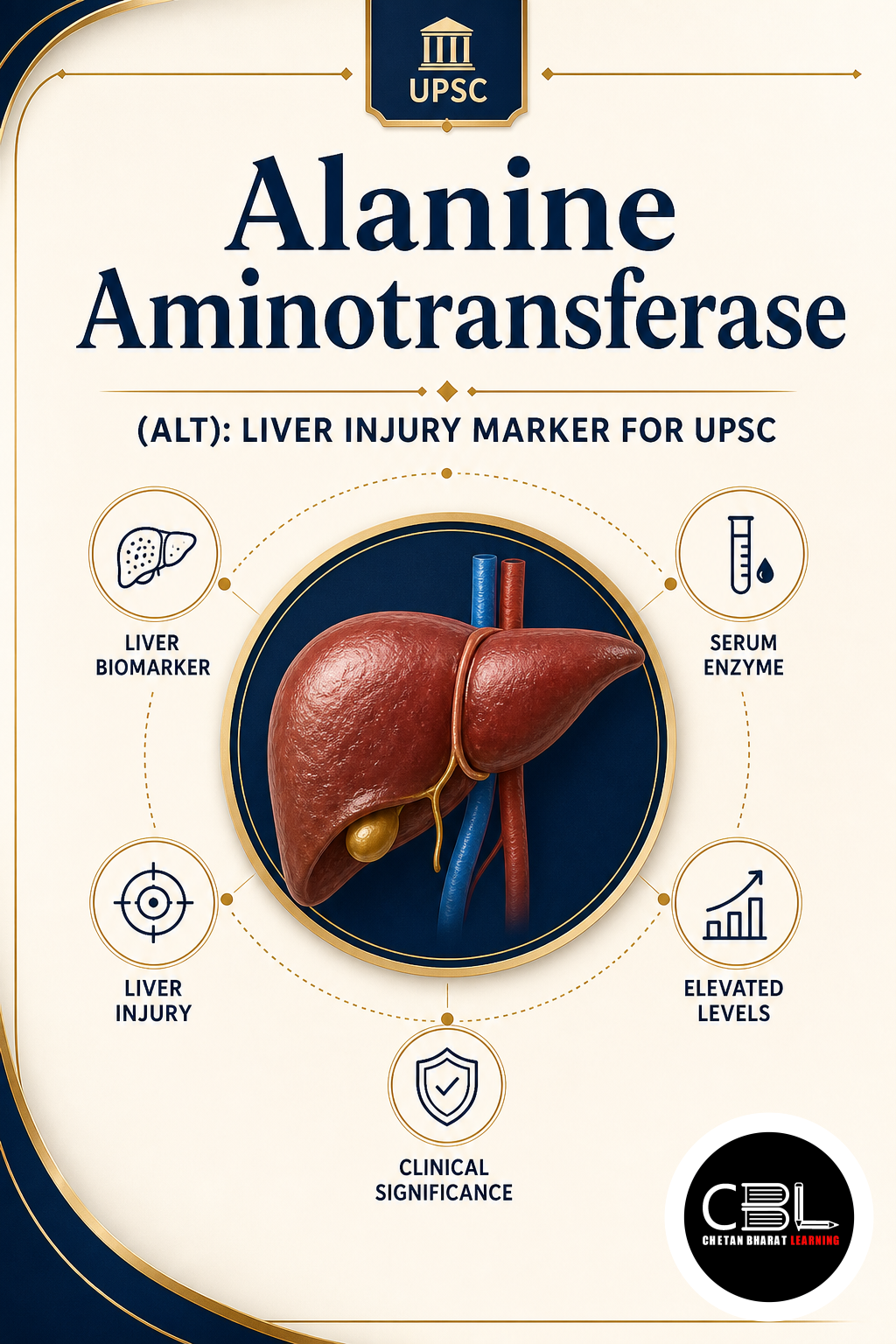
Alanine Aminotransferase (ALT), also known as Serum Glutamic-Pyruvic Transaminase (SGPT), is an enzyme found predominantly in liver cells (hepatocytes). Smaller quantities are also present in the heart, skeletal muscles and kidneys.
ALT plays an essential role in amino acid metabolism by catalysing the conversion of alanine into pyruvate, an important step in cellular energy metabolism.
Why is Alanine Aminotransferase in News?
The Union Health Ministry has encouraged routine monitoring of ALT levels as an early indicator of liver injury and to promote timely diagnosis of liver diseases.
Regular screening can facilitate early medical intervention before significant liver damage develops.
Key Features
Alanine Aminotransferase is one of the most widely used biochemical markers of liver health.
- Predominantly present in the liver: ALT is concentrated mainly in hepatocytes, making it highly useful for assessing liver cell injury.
- Role in metabolism: It catalyses the conversion of alanine to pyruvate during amino acid metabolism.
- Other locations: Small amounts are also found in the heart, skeletal muscles and kidneys.
- Sensitive indicator: Elevated blood ALT levels generally indicate damage or inflammation of liver cells.
Why is ALT Important?
ALT is routinely used by clinicians to evaluate liver health.
- Early marker of liver injury: Damage or inflammation of hepatocytes causes ALT to leak into the bloodstream, making it one of the earliest indicators of liver injury.
- Part of Liver Function Test (LFT): ALT is measured along with AST, ALP, GGT, bilirubin, albumin and prothrombin time to assess liver function.
- Not a standalone diagnosis: Elevated ALT indicates liver cell injury but does not determine the exact cause or severity of liver disease.
Clinical Significance
Monitoring ALT levels supports early detection and management of liver disorders.
- Early detection: Identifies liver injury before severe symptoms appear.
- Disease monitoring: Helps assess progression and response to treatment in liver diseases.
- Routine screening: Frequently included in preventive health check-ups and clinical investigations.
- Public health relevance: Early diagnosis contributes to better liver health outcomes and timely treatment.
Way Forward
Regular liver health screening, greater public awareness and timely medical consultation can improve the early diagnosis of liver diseases. Integrating preventive screening with healthy lifestyle practices can reduce the burden of chronic liver disorders.
Strengthening public health campaigns and encouraging routine liver function testing among high-risk groups will contribute to improved disease prevention and management. Official information is available through the Ministry of Health and Family Welfare and the Indian Council of Medical Research.
Prelims Package
Quick Facts
| Also Known As | SGPT |
|---|---|
| Primary Location | Liver Cells (Hepatocytes) |
| Clinical Use | Early Liver Injury Marker |
Prelims Practice Corner
- Question: Alanine Aminotransferase (ALT) is also known as?
(a) SGOT (b) SGPT (c) GGT (d) ALP
Answer: (b) - Question: ALT is predominantly found in which organ?
(a) Kidney (b) Heart (c) Liver (d) Pancreas
Answer: (c) - Question: ALT catalyses the conversion of?
(a) Glucose to glycogen (b) Alanine to pyruvate (c) Pyruvate to lactate (d) Fatty acids to ketones
Answer: (b) - Question: ALT is routinely measured as part of?
(a) Kidney Function Test (b) Liver Function Test (c) Thyroid Profile (d) Lipid Profile
Answer: (b) - Question: An elevated ALT level primarily indicates?
(a) Exact liver disease diagnosis (b) Liver cell injury (c) Kidney failure (d) Heart attack
Answer: (b)
Mains Package
-
Question: Explain the significance of biochemical markers such as Alanine Aminotransferase (ALT) in preventive healthcare and early disease detection. (10 marks)
Answer Structure:
- Intro: Define ALT and its physiological role.
- Body: Liver injury detection, LFT, clinical significance and preventive healthcare.
- Conclusion: Emphasise early diagnosis and public health awareness.
-
Question: Discuss the importance of routine health screening in reducing the burden of non-communicable diseases in India. (15 marks)
Answer Structure:
- Intro: Explain preventive healthcare.
- Body: Screening, early diagnosis, liver diseases, health awareness and public health strategies.
- Conclusion: Highlight preventive healthcare as a key public health priority.
FAQs
What is Alanine Aminotransferase (ALT)?
Alanine Aminotransferase (ALT), also called SGPT, is an enzyme found mainly in liver cells that plays an important role in amino acid metabolism.
Why is ALT considered an early marker of liver injury?
When liver cells are damaged or inflamed, ALT leaks into the bloodstream, making it one of the earliest laboratory indicators of liver injury.
Can an elevated ALT level diagnose liver disease?
No. Elevated ALT indicates liver cell injury but does not identify the exact cause or severity of liver disease. It must be interpreted along with other clinical findings and liver function tests.
Related Current Affairs
Preparing for UPSC, PCS or HCS?
Talk to a mentor at Chetan Bharat Learning, Chandigarh. Free guidance on choosing the right exam and building a study plan.
Chat on WhatsAppCall 97793 53345UPSC / IAS / PCS coaching in Chandigarh · Trusted by aspirants across Punjab & Haryana
Leave a Reply
You must be logged in to post a comment.