
Important for:
UPSC, Haryana HCS, Punjab PCS
Prelims: Death penalty, mitigating factors, sentencing
Mains: GS Paper 2 & 4 — Judiciary, Criminal Justice, Ethics
Why in News?
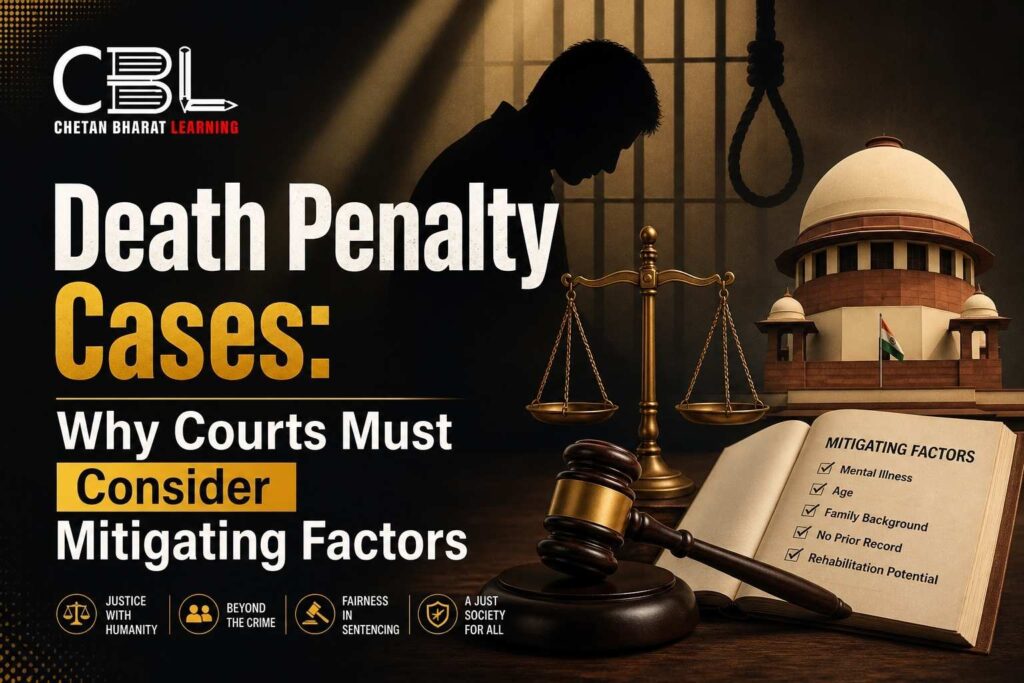
The Supreme Court has directed courts to mandatorily obtain reports on mitigating circumstances before awarding the death penalty, ensuring a more balanced and just sentencing process.
What are Mitigating Factors?
➤ Factors that may reduce the severity of punishment
Examples:
- Age of the accused
- Mental health condition
- Socio-economic background
- Possibility of reform
Court’s Key Directions
1. Mandatory Reports at Trial Stage
- Trial courts must:
→ Collect mitigating factor reports
2. Fair Opportunity to Accused
- Parties must:
→ Review and respond to reports
3. Avoid Delays
- Timely submission of reports
- Prevent delays in justice
4. Fresh Reports if Needed
- Higher courts can:
→ Seek new reports
Legal Principle Involved
➤ Reformative justice
- Focus:
- Rehabilitation
- Not just punishment
Key Issues Highlighted
1. Lack of Structured Framework
- No standard method to assess mitigating factors
2. Inequality in Legal Representation
- Accused often lack proper legal support
3. Delay in Consideration
- Mitigating factors sometimes considered too late
Role of Legal Aid
- Court emphasised:
→ Strong legal representation - Suggested:
- Dedicated legal teams for death penalty cases
India-Specific Context
- Death penalty awarded in:
→ Rare cases - Based on:
→ “Rarest of rare” doctrine
Key Insight for UPSC
➤ Justice is not only about punishment
✔ It must ensure:
- Fair trial
- Equal representation
- Possibility of reform
Ethics Dimension (GS4)
➤ Key values:
- Justice
- Compassion
- Fairness
- Human dignity
PRELIMS PRACTICE QUESTIONS
Q1. Death penalty in India is based on:
A. Random selection
B. Rarest of rare doctrine
C. Economic condition
D. Political decision
✅ Answer: B
Q2. Mitigating factors refer to:
A. Increasing punishment
B. Reducing punishment severity
C. Ignoring crime
D. Legal loopholes
✅ Answer: B
Q3. Reformative justice focuses on:
A. Punishment only
B. Rehabilitation
C. Revenge
D. Deterrence only
✅ Answer: B
Q4. Legal aid ensures:
A. Business growth
B. Fair representation
C. Trade development
D. Tax collection
✅ Answer: B
Q5. Which GS paper covers ethics?
A. GS1
B. GS2
C. GS3
D. GS4
✅ Answer: D
CBL Mains Practice Question
“The death penalty in India must be guided by reformative justice and fairness.”
Discuss with reference to recent Supreme Court guidelines.
FAQs
1. What are mitigating factors?
Circumstances that reduce punishment severity.
2. Why are they important?
They ensure fair and balanced sentencing.
3. What is reformative justice?
Focus on rehabilitation instead of punishment.
4. What is the rarest of rare doctrine?
Principle guiding death penalty cases in India.
5. Which GS paper covers this topic?
GS Paper 2 & GS Paper 4.
Preparing for UPSC, PCS or HCS?
Talk to a mentor at Chetan Bharat Learning, Chandigarh. Free guidance on choosing the right exam and building a study plan.
Chat on WhatsAppCall 97793 53345UPSC / IAS / PCS coaching in Chandigarh · Trusted by aspirants across Punjab & Haryana
Leave a Reply
You must be logged in to post a comment.