
Important for:
UPSC, Haryana HCS, Punjab PCS
Prelims: Nuclear energy, PHWR, SMR
Mains: GS Paper 2 & 3 — International Relations, Energy Security
Why in News?
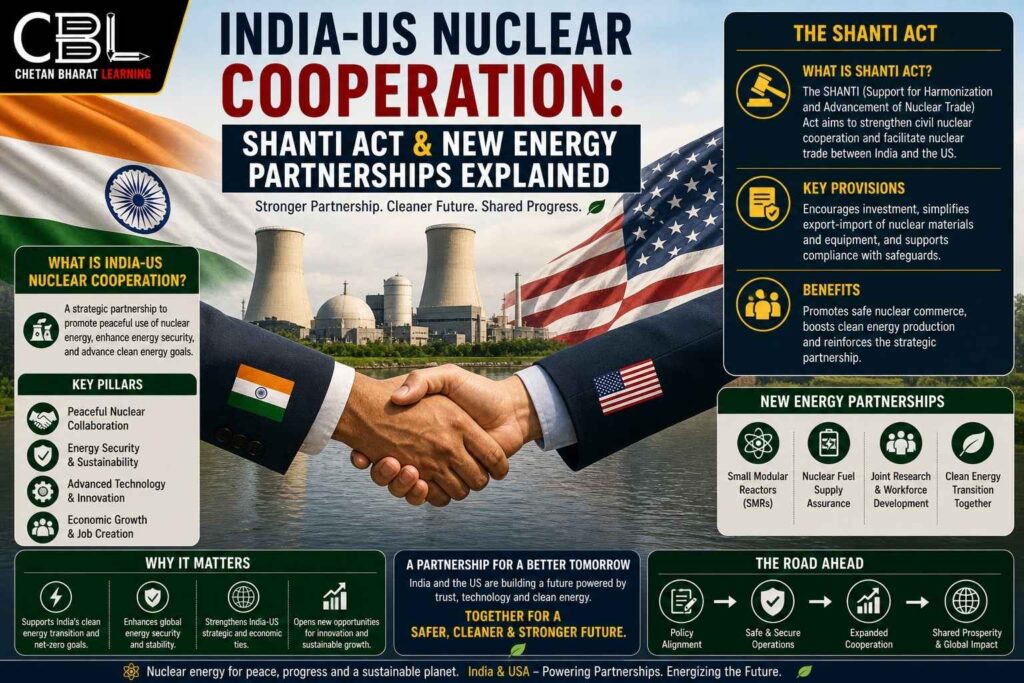
A high-level US delegation is visiting India to explore new nuclear energy partnerships, following India’s recent reforms through the SHANTI Act.
What is the SHANTI Act?
➤ Full form:
Sustainable Harnessing of Nuclear Energy Regulations in India (SHANTI) Act, 2025
Key Features:
- Allows:
→ Private sector participation - Expands scope:
→ Fuel management & operations - Updates:
→ Liability framework
What is Changing in India’s Nuclear Sector?
Earlier:
- Dominated by:
→ Public sector
Now:
- Opening to:
→ Private players
→ Foreign collaboration
Technology Shift
1. PHWR (Pressurised Heavy Water Reactor)
- India’s traditional technology
2. LWR (Light Water Reactor)
- Widely used globally
3. SMR (Small Modular Reactor)
- Smaller, flexible, cost-effective
- Future of nuclear energy
Why India Needs This
1. Energy Security
- Reduce dependence on fossil fuels
2. Base Load Power
- Reliable continuous energy
3. Climate Goals
- Low-carbon energy source
India–US Cooperation
- Technology transfer
- Investment opportunities
- Strategic partnership
Concerns & Challenges
- Nuclear liability issues
- Safety concerns
- Cost of infrastructure
- Public perception
Key Insight for UPSC
→ Energy transition requires:
✔ Policy reform + global cooperation
PRELIMS PRACTICE QUESTIONS
Q1. SHANTI Act relates to:
A. Agriculture
B. Nuclear energy
C. Trade
D. Transport
✅ Answer: B
Q2. PHWR uses:
A. Light water
B. Heavy water
C. Air
D. Coal
✅ Answer: B
Q3. SMR stands for:
A. Small Modular Reactor
B. Solar Machine Reactor
C. Safe Modular Reactor
D. None
✅ Answer: A
Q4. Nuclear energy helps in:
A. Increasing emissions
B. Reducing emissions
C. Increasing imports
D. Trade
✅ Answer: B
Q5. India-US nuclear ties relate to:
A. Agriculture
B. Energy cooperation
C. Trade
D. Tourism
✅ Answer: B
CBL Mains Practice Question
“India’s nuclear energy expansion requires both domestic reforms and international cooperation.” Discuss.
FAQs
1. What is the SHANTI Act?
A law reforming India’s nuclear energy sector.
2. What is SMR?
Small modular nuclear reactors.
3. Why is nuclear energy important?
It provides clean and reliable power.
4. Why is the US involved?
For technology and investment collaboration.
5. Which GS papers cover this?
GS2 and GS3.
Related Current Affairs
Preparing for UPSC, PCS or HCS?
Talk to a mentor at Chetan Bharat Learning, Chandigarh. Free guidance on choosing the right exam and building a study plan.
Chat on WhatsAppCall 97793 53345UPSC / IAS / PCS coaching in Chandigarh · Trusted by aspirants across Punjab & Haryana
Leave a Reply
You must be logged in to post a comment.