
| GS Paper | GS-III |
|---|---|
| Subject | Indian Economy, Industry and Employment |
| Syllabus Pointers | Prep with our comprehensive UPSC Current Affairs Hub analysis guidelines. |
Key Dimensions of Global Capability Centres
Recent updates regarding Global Capability Centres highlight India’s transition from a low-cost outsourcing destination to a global innovation and research hub. The uploaded newspaper reports that while GCC costs are increasing, many countries are attempting to emulate India’s successful GCC ecosystem.
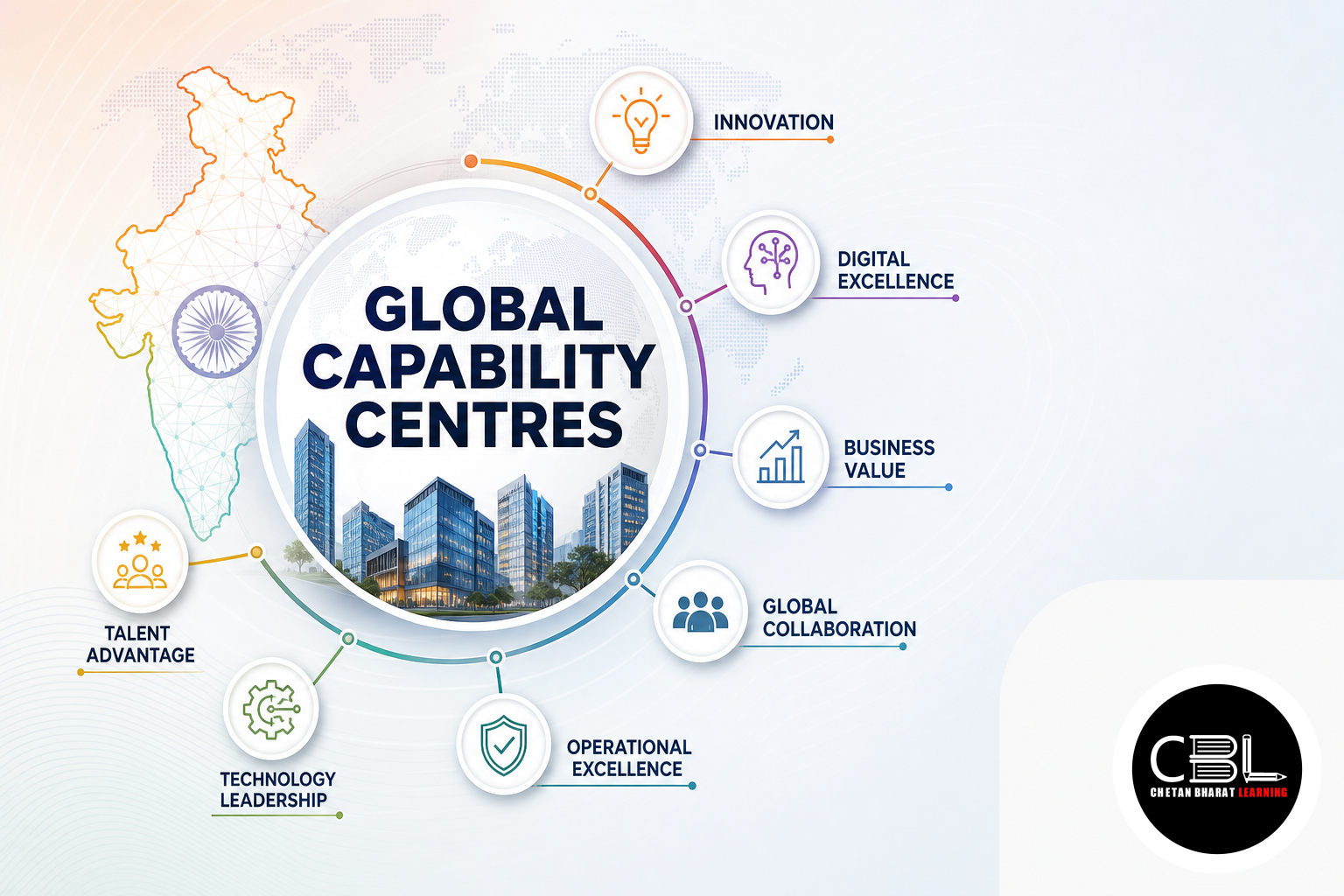
A Global Capability Centre (GCC) is a captive offshore unit established by a multinational company to perform high-value business, technology and research functions. Unlike traditional BPOs, GCCs undertake innovation, engineering, artificial intelligence, cybersecurity, semiconductor design and product development.
Evolution in India: India progressed from back-office operations in the 1990s to knowledge services after 2005 and today hosts advanced engineering, R&D and global innovation centres. GCCs reportedly employ over two million professionals and contribute significantly to GDP.
Why India Leads
India’s advantages include a large skilled workforce, mature IT ecosystem, competitive costs, English proficiency, digital infrastructure and favourable time zones. The next phase requires moving from cost competitiveness to innovation leadership through intellectual property creation and advanced research.
Countries such as Vietnam, the Philippines and several Eastern European nations are competing aggressively for GCC investments. Rising wages, talent shortages and global competition underline the need for continuous reforms.
UPSC Value Addition
- Prelims: GCCs, BPO, KPO, Intellectual Property Rights, Semiconductor Mission, AI ecosystem.
- Mains: Analyse the role of Global Capability Centres in strengthening India’s innovation economy, employment generation and global value chain integration.
For broader background on intellectual property and innovation ecosystems, refer to global developmental tracking frameworks.
Way Forward
India should strengthen research ecosystems, improve university-industry collaboration, promote intellectual property creation and expand GCCs into Tier-2 and Tier-3 cities. Sustained investments in AI, semiconductors, digital infrastructure and high-end skills will help preserve India’s competitive advantage.
Prelims Practice Corner
Question 1
Global Capability Centres primarily undertake which type of activities?
- (a) Agricultural marketing
- (b) High-value business and innovation functions
- (c) Mining operations
- (d) Defence procurement
Answer: (b) GCCs perform advanced engineering, R&D, digital, AI and business functions for multinational companies.
Question 2
Which of the following best differentiates a GCC from a traditional BPO?
- (a) Ownership by parent company and innovation-focused work
- (b) Only customer support
- (c) Only domestic operations
- (d) Only manufacturing
Answer: (a) GCCs are captive centres that increasingly undertake strategic, innovation-driven and product-oriented work.
Mains Practice Question
“Global Capability Centres represent India’s shift from a services economy to an innovation-driven economy.” Discuss. (150 Words, 10 Marks)
FAQs
Why are GCCs important for India? They generate high-quality employment, promote innovation, strengthen global value chains and increase exports of knowledge-intensive services.
Suggested Internal Links: Semiconductor Mission, Digital India, Artificial Intelligence, Intellectual Property Rights and Global Value Chains.
Related Current Affairs
Preparing for UPSC, PCS or HCS?
Talk to a mentor at Chetan Bharat Learning, Chandigarh. Free guidance on choosing the right exam and building a study plan.
Chat on WhatsAppCall 97793 53345UPSC / IAS / PCS coaching in Chandigarh · Trusted by aspirants across Punjab & Haryana
Leave a Reply
You must be logged in to post a comment.